By Gugulethu Tshabalala
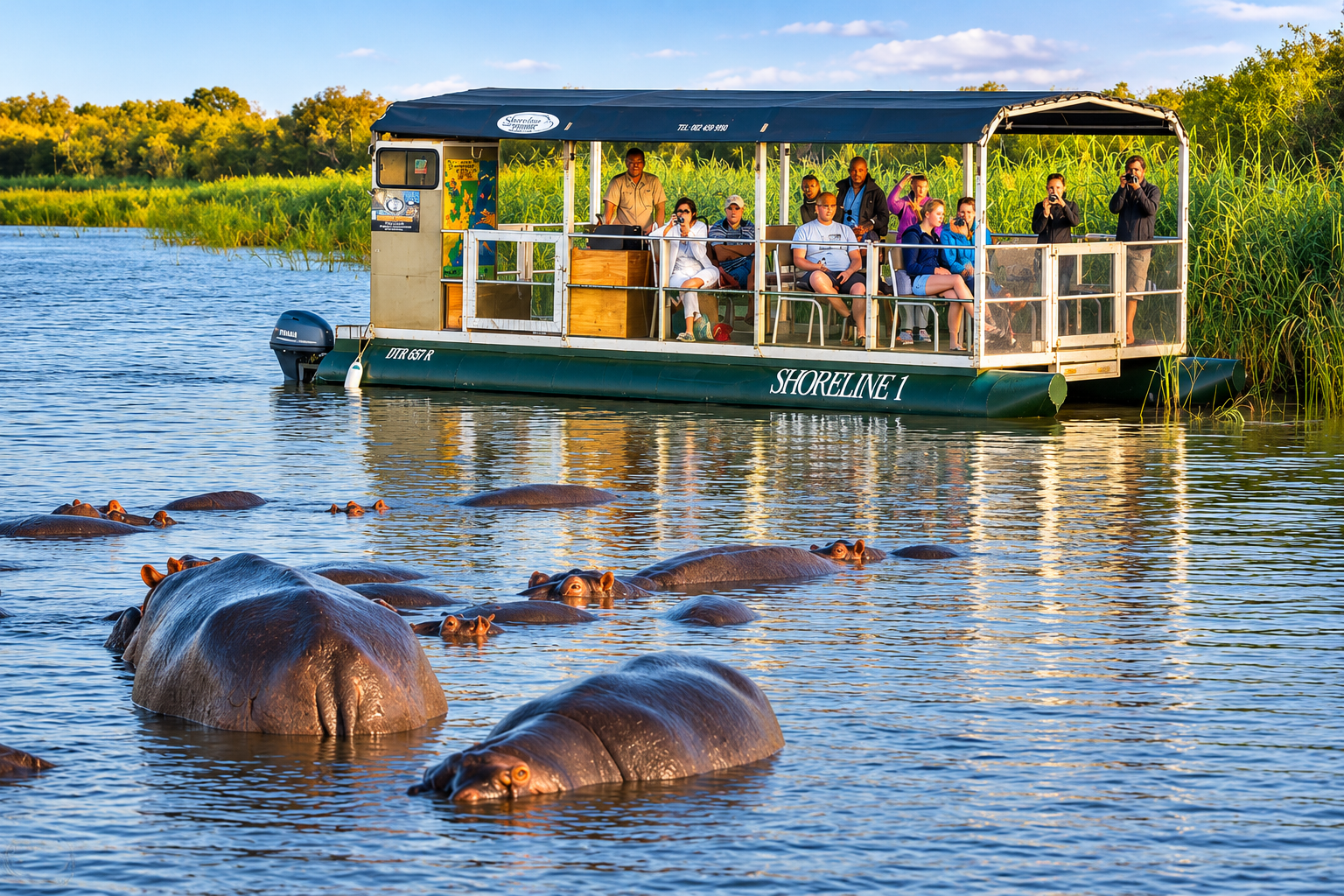
There aren’t many places in South Africa where the town sign might as well read “give way to hippos”. St Lucia is one of them. Tucked against the St Lucia estuary on KwaZulu-Natal’s north coast, this small holiday town is the doorstep to iSimangaliso Wetland Park, South Africa’s first UNESCO World Heritage Site. By day you can watch hippos and crocodiles from the water, drive through coastal forest past elephant and rhino, and walk onto a warm Indian Ocean beach, all in the same outing. By night, the hippos come into town.
And right now is a special time to go. November marks the start of turtle nesting season on iSimangaliso’s beaches, while the last humpback whales of the year are still passing along the coast. If you’re planning a festive road trip, St Lucia deserves a place on the route.
What to Do
St Lucia is made for travellers who want bush, lake and ocean in a single trip.
Take an estuary boat cruise. This is the classic St Lucia experience: hippos and crocodiles in their natural habitat, plus plenty of waterbirds, seen from a boat on the estuary. Licensed operators run cruises from town.
Go on a coastal safari to Cape Vidal. About 30 km north of town, the Eastern Shores road winds through forest, grassland and freshwater pans, with several loop roads for game viewing and birding. The Eastern Shores are home to elephant, rhino, buffalo, hippo, crocodile, hyena and leopard. At the end of the road waits Cape Vidal, a sheltered bay where low tide exposes rock pools that are good for snorkelling. Drive it yourself or join a guided game drive.
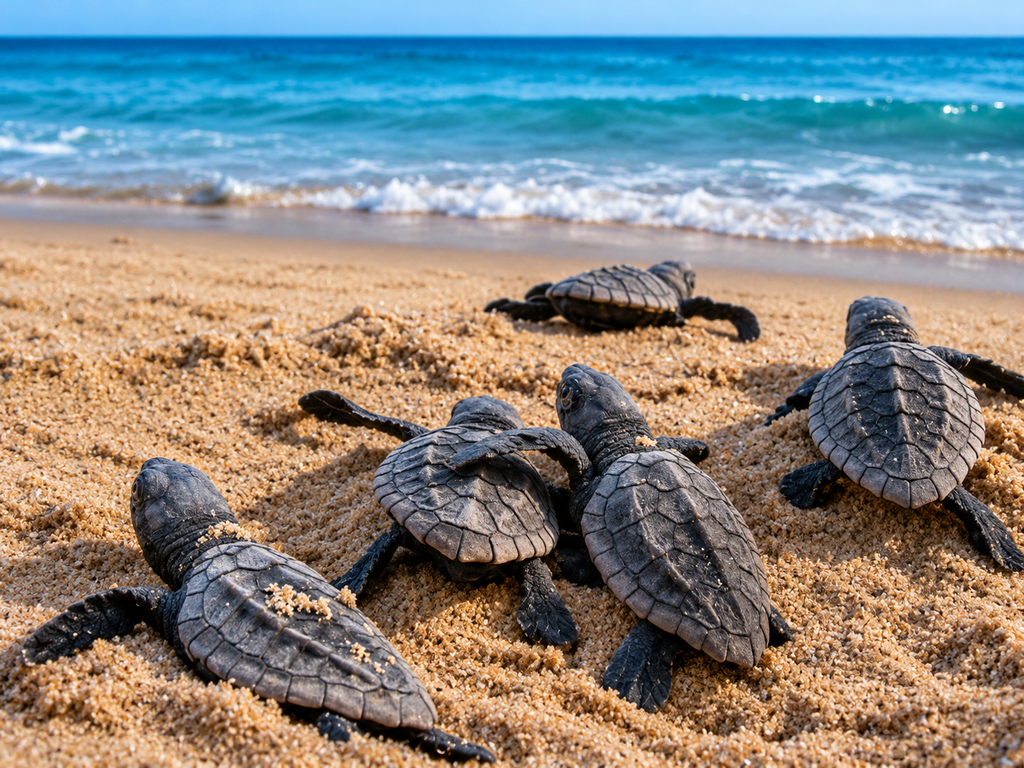
Track nesting turtles. From November, loggerhead and leatherback turtles come ashore on iSimangaliso’s beaches at night to lay their eggs. Later in the season, hatchlings make their dash for the sea. Watching them is one of the most moving wildlife experiences in the country, but it is not guaranteed. Tours run only with licensed operators and are timed around low tide, so patience (and a bit of luck) is part of the deal.
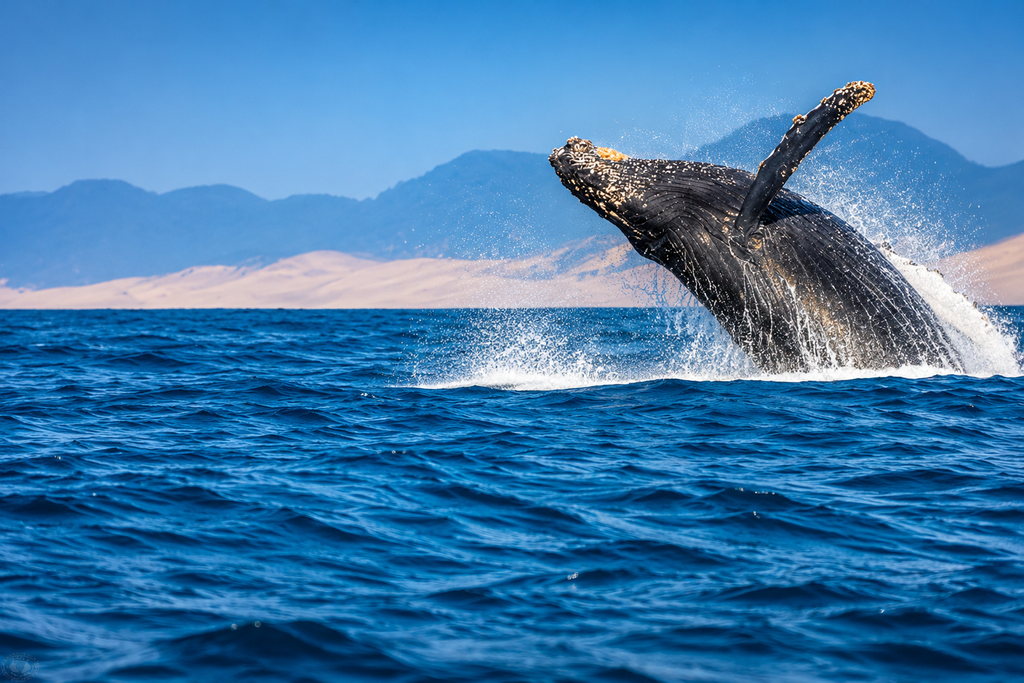
Catch the last of the whales. Humpback whales migrate past this coastline from June to November, so the next few weeks are your final chance this year. Watch from the shore, including the cliffs at Mission Rocks, or go out with a licensed whale-watching operator.
Xplore Mission Rocks. About 16 km south of Cape Vidal, Mission Rocks is a rugged stretch of rocky shore with tidal pools full of small marine life at low tide. It’s great for picnics and photographs, but strong currents make it unsafe for swimming. At low tide you can walk about 2 km along the beach to the Bats Cave, home to a colony of Egyptian fruit bats. Check the tide tables before you set out.
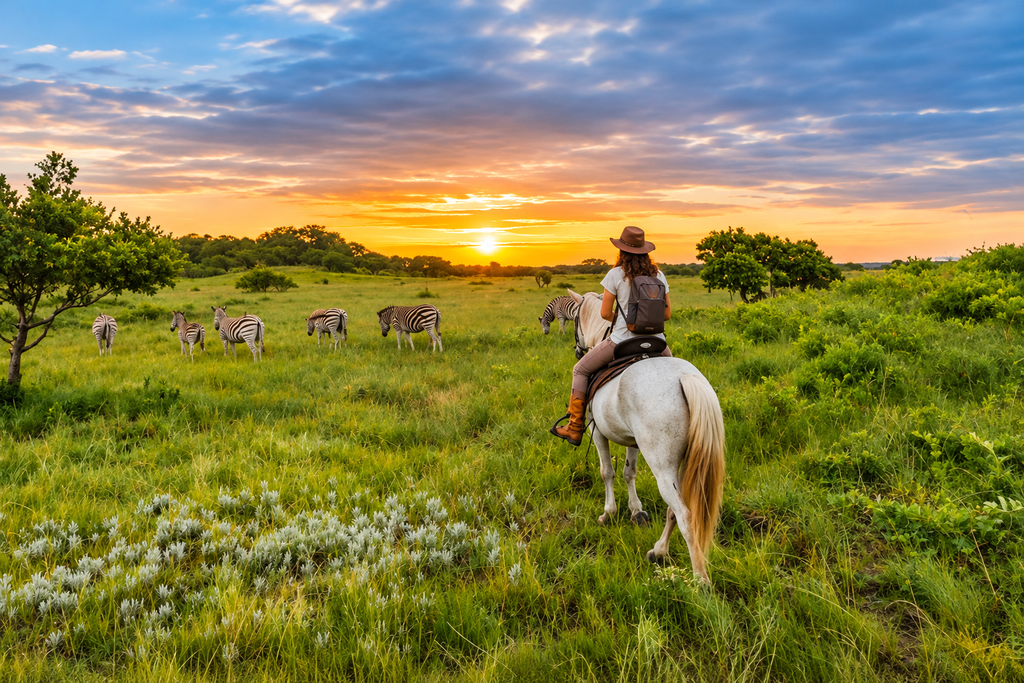
Ride through the bush. Horse safaris operate on the southern Eastern Shores, with bush rides among zebra, wildebeest and other plains game, and combined beach-and-bush rides.
Where to Eat
Food in St Lucia is relaxed and holiday-friendly, with plenty of seafood and casual meals along the main street. Cafés, restaurants and takeaways serve a steady stream of visitors, and many guesthouses also offer breakfast. If you prefer to self-cater, the town has shops for basics.
Where to Stay
Accommodation in town is mostly small-scale and owner-run: guesthouses, B&Bs, self-catering units and lodges, many within easy reach of the estuary. For something wilder, Cape Vidal inside the park has self-catering cabins and campsites set in the dune forest near the beach. Book early for December and January, as the town fills up quickly during the school holidays.
Getting There
St Lucia is roughly 245 to 280 kilometres north of Durban, about a two-and-a-half to three-hour drive via the N2 and the R618 through Mtubatuba. From Johannesburg it is roughly 600 to 640 kilometres, around six and a half to seven and a half hours without long stops. Richards Bay is the nearest airport.
A simple festive road-trip idea is to spend two or three nights in St Lucia for the estuary, Cape Vidal and a turtle tour, then continue north on the N2 towards Sodwana Bay or Kosi Bay, both also part of iSimangaliso.
Good to Know
- Gate times. In summer (November to March), iSimangaliso’s gates have previously opened from 05:00 to 19:00, with strictly no late entry.
- Book ahead in peak season. Cape Vidal has had a daily limit on day-visitor vehicles, so arrive early in December. Book turtle tours and boat cruises in advance, and use licensed operators only.
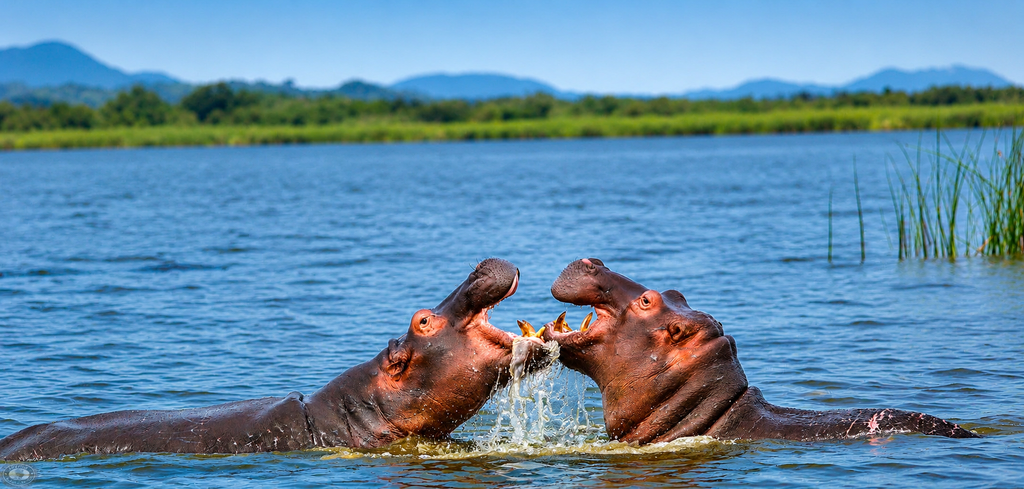
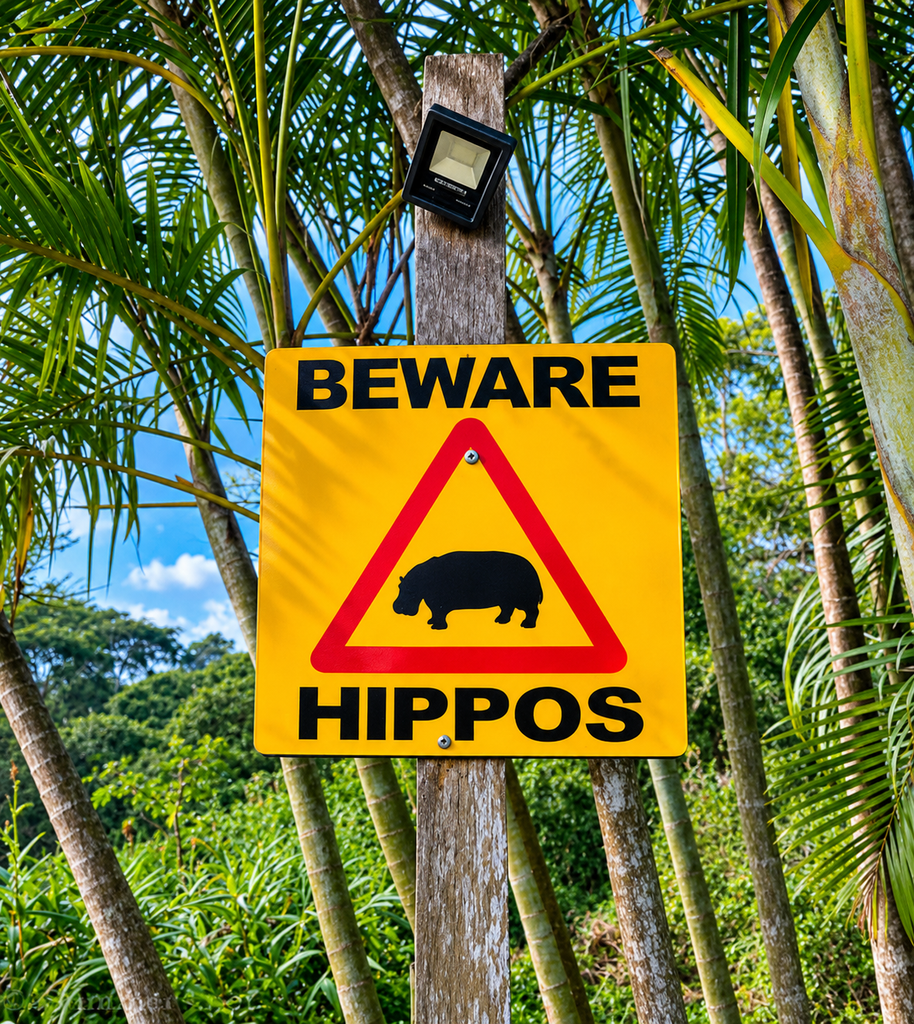
- Hippo safety. Hippos graze in and around town at night. Do not walk around after dark in quiet or unlit areas, drive slowly, keep your distance, and never get between a hippo and the water.
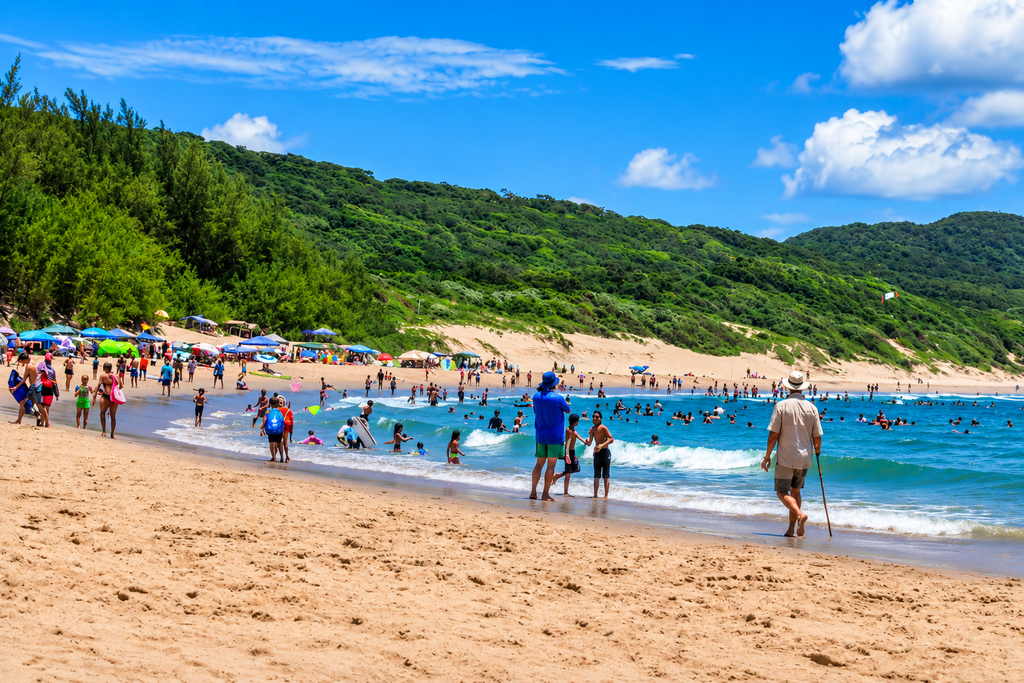
- No swimming in the lake or estuary. It is prohibited because of crocodiles and hippos. In the sea, swim only where lifeguards are on duty, as currents can be strong.
- Malaria. Speak to your doctor or a travel clinic before you go, as this part of northern KwaZulu-Natal can be a malaria-risk area.
- Turtle etiquette. Wear dark clothing and follow your guide’s rules on torches and photographs. Light can disturb nesting turtles, and flash photography is not appropriate.
Fun Facts
iSimangaliso is an isiZulu word for something wondrous. The park was inscribed by UNESCO in 1999 as South Africa’s first World Heritage Site, and was renamed from the Greater St Lucia Wetland Park in 2007.
It protects about 220 km of coastline, from Maphelane to the Mozambique border. In 2025 the World Heritage listing was extended across the border to include Mozambique’s Maputo National Park.
More than 520 bird species have been recorded in the park, and more than half of KwaZulu-Natal’s waterbirds feed, roost and nest in the Lake St Lucia estuary.
Of the 155 fish species recorded in the Lake St Lucia estuarine system, 71 depend on the lake as a nursery area.
UNESCO notes that the property is the second most important nesting site in the Indian Ocean for loggerhead and leatherback turtles.
iSimangaliso describes the park as home to Africa’s largest hippo population.
Formal protection around the St Lucia lake system began in 1895, making this one of the oldest conservation landscapes in Africa.
St Lucia is a small town with a very big backyard. It’s where your morning coffee might come with a fish eagle’s call, and your drive home after dinner might wait for a hippo to cross the road. Go now for the turtles and the last of the whales, and you’ll understand why this corner of KwaZulu-Natal is one of South Africa’s most wondrous places to Xplore.