By Gugulethu Tshabalala
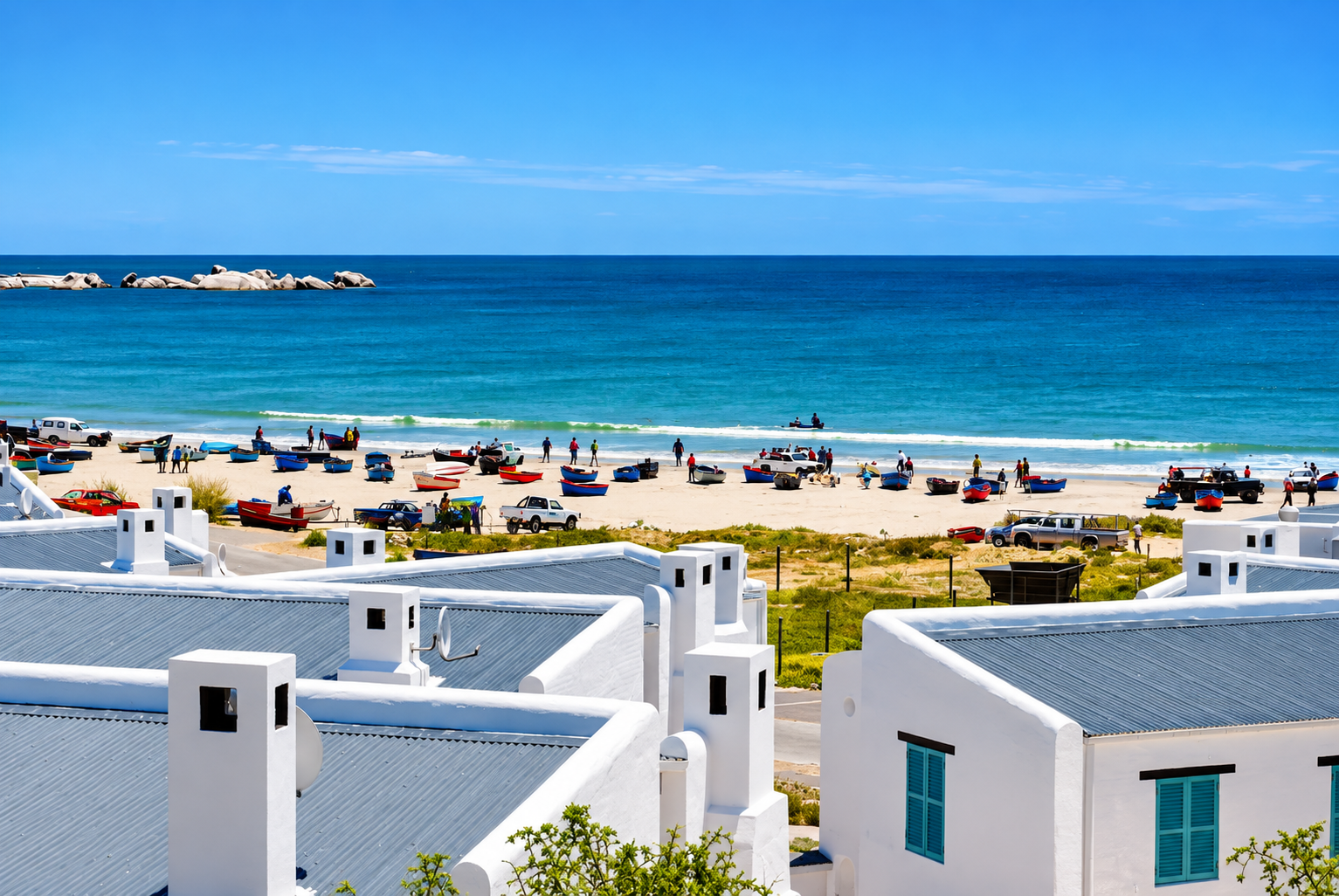
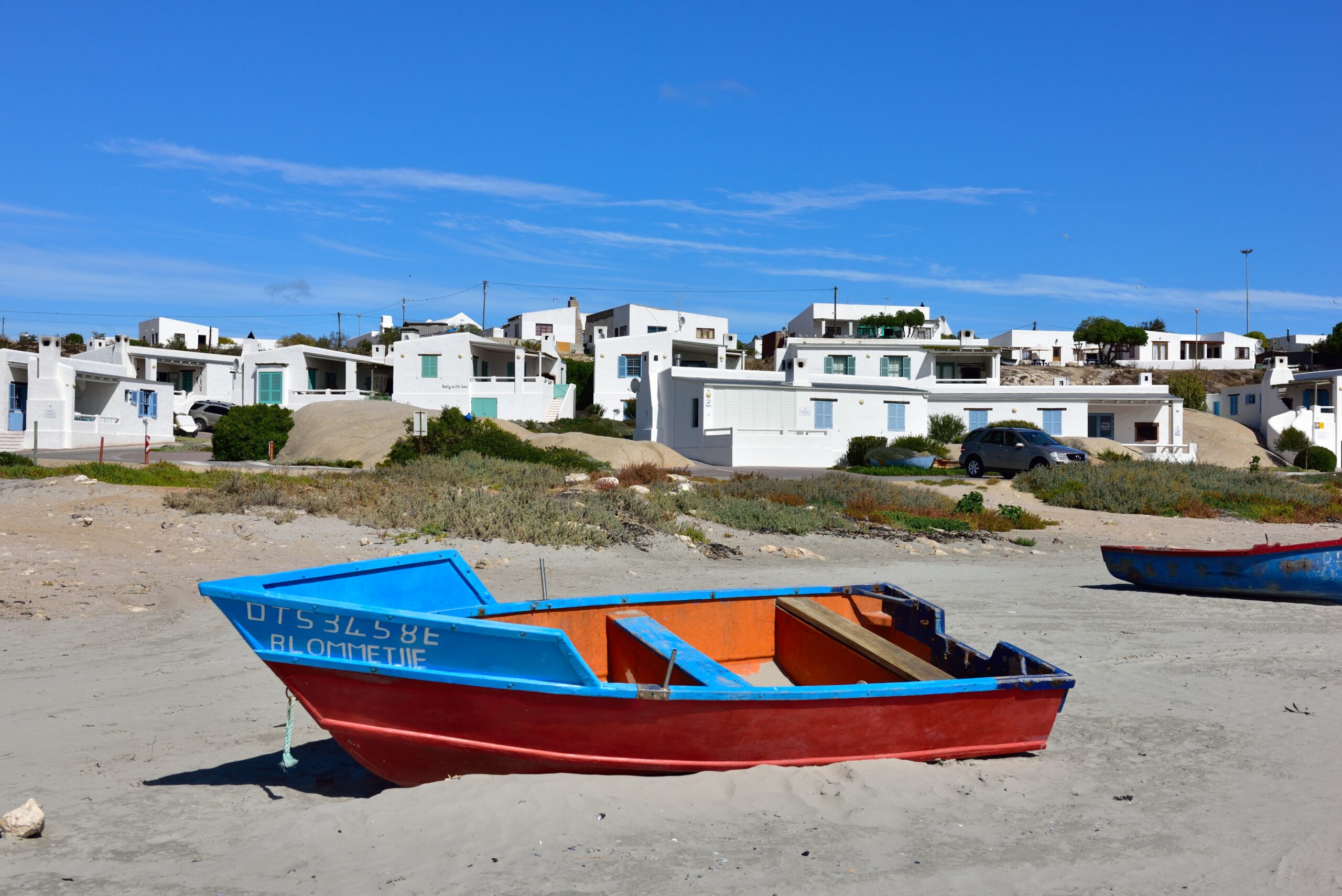
There aren’t many places on the West Coast where the cottages are still painted a clean, sea-weathered white, and the boats on the sand belong to people who work the Atlantic. Paternoster is one of them.
This small fishing village sits at Cape Columbine, between Saldanha Bay and St Helena Bay, about 150 kilometres north of Cape Town and roughly 15 to 16 kilometres from Vredenburg. Life here has long been tied to the sea. Fishermen still head out in colourful wooden boats, and visitors come for the quiet beaches, West Coast seafood, and the lighthouse that marks one of the westernmost stretches of the Western Cape.
November is early summer on this coast: long, dry days, bright light, and the start of the festive-season rush. It is not wildflower season, those displays usually arrive in August and September but it is a lovely time to walk the beach, visit the reserve, and eat simply by the water before the December holidays fill the village.
What to Do
Paternoster is made for travellers who want a fishing village, a wild shoreline and a proper West Coast meal in a single trip.
Walk the village and the beach.
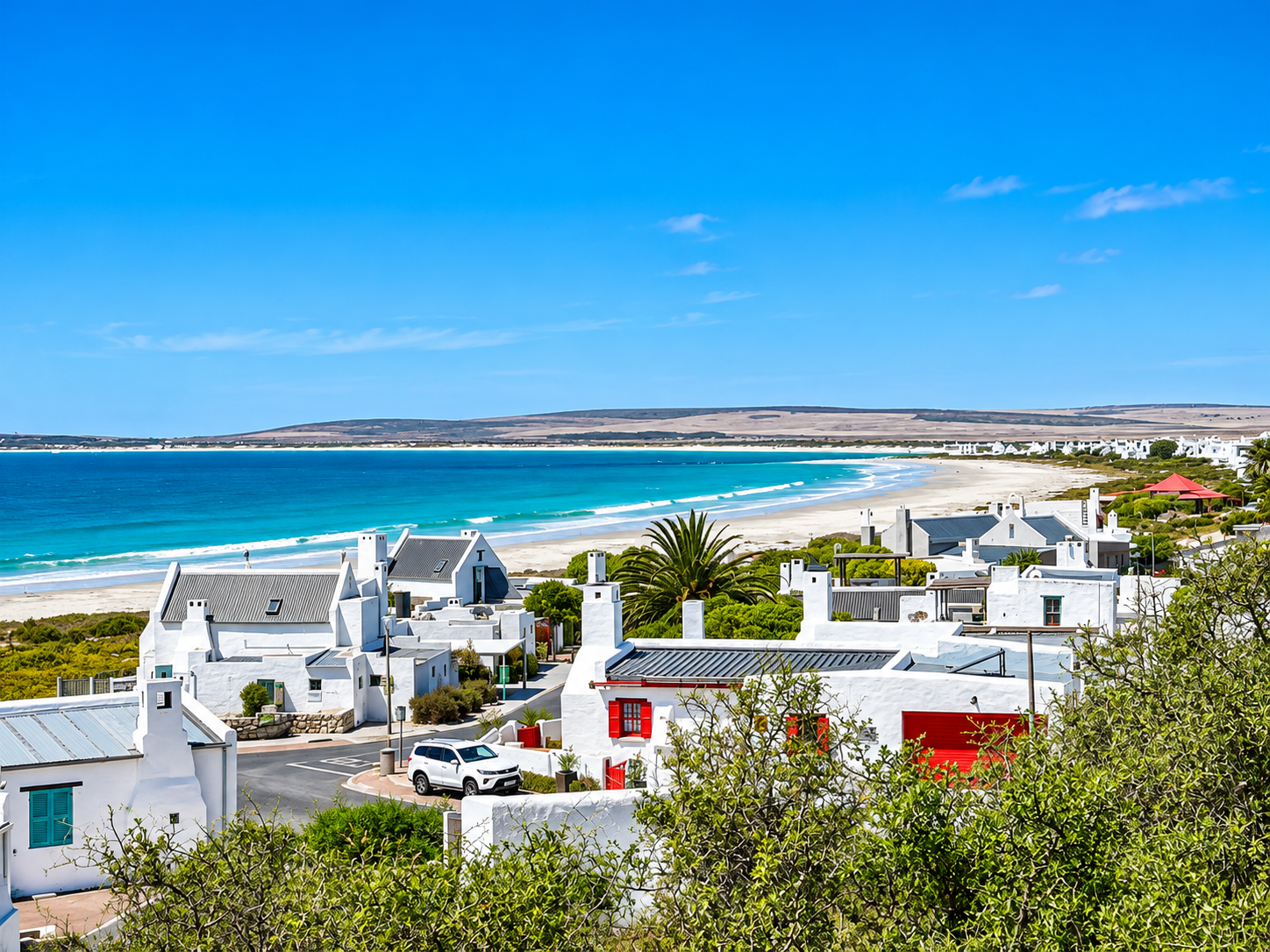
The whitewashed cottages are the first thing most visitors notice, strung along the sand and the low dunes. Stroll from the beach into the small village streets, watch the boats come and go, and give yourself time for the long Atlantic horizon. The water is cold, thanks to the Benguela Current, so a swim is bracing rather than tropical, but the shoreline is made for slow walks.
Visit Cape Columbine Nature Reserve.
About five kilometres from the village, this 263-hectare reserve was declared in December 1973 and is managed by Saldanha Bay Municipality. It follows a rocky stretch of coastline and is a place for hiking, sea views and memorable sunsets. At Tietiesbaai, inside the reserve, there is a simple campsite on the Atlantic — no electricity, gravel access, and a real sense of being out on the edge of the continent. The municipality describes the reserve as the furthest westerly destination in the Western Cape.
See Cape Columbine Lighthouse.
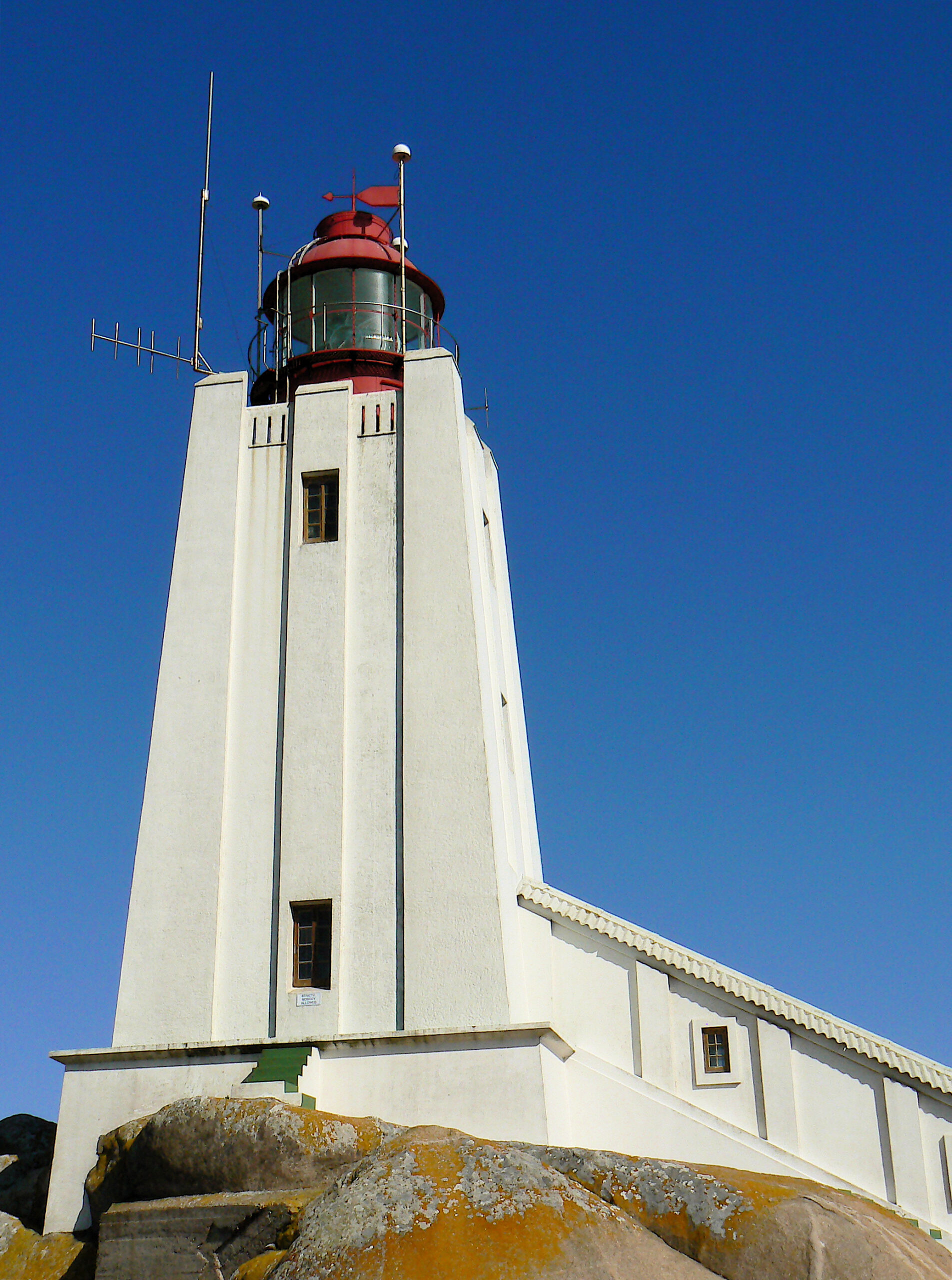
The lighthouse stands on Castle Rock, around five kilometres from the village. Transnet National Ports Authority records that it was commissioned on 1 October 1936 and built by H. C. Cooper: a 15-metre square masonry tower with a red lantern house. The light stands about 80 metres above sea level and flashes once every 15 seconds. It was the last manned lighthouse built on the South African coast. Transnet notes that all local lighthouses are now automated, but there is still a presence on site. Tours run Monday to Friday, excluding public holidays, from 10:00 to 15:00. Confirm on 021 449 2400 or lighthouse.tourism@transnet.net before you go.
Taste the West Coast catch.
Paternoster is well known for its seafood. West Coast Way, the regional tourism route, notes that you can buy fresh fish as it comes off the boats, or sit down to a meal at one of the village restaurants. West Coast rock lobster, or crayfish, is part of the area’s fishing heritage, but it is tightly regulated: in the nature reserve, only people with valid permits may catch crayfish, and no fish bait or seafood may be taken from the rocks.
Where to Eat
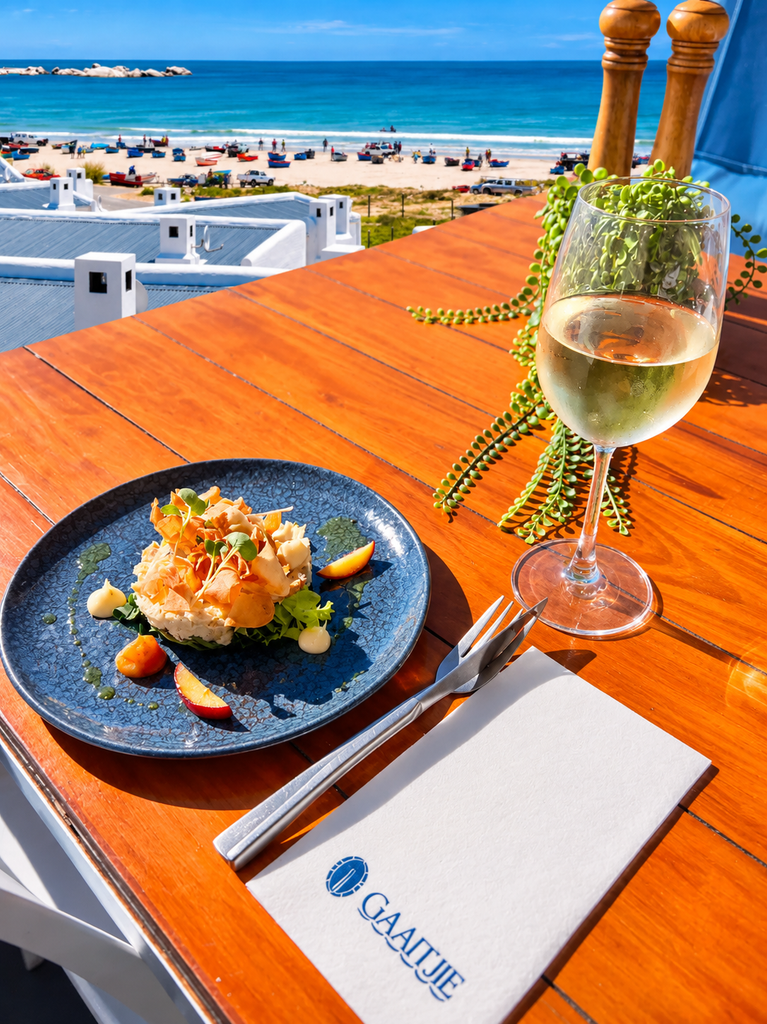
Food in Paternoster is relaxed and close to the sea, with an emphasis on West Coast seafood. For a sit-down meal with a view, Gaaitjie is hard to beat. The restaurant sits in a simple whitewashed fisherman’s cottage on the rocks of Paternoster beach, a Cape heritage building thought to date back to around 1855. Its menu uses local produce with contemporary touches, and the wine list leans on the West Coast and surrounds.
Gaaitjie is open Thursday to Monday for lunch (12:00 to 14:00) and dinner (18:00 to 20:00), and closed on Tuesdays and Wednesdays. Booking is essential: call 022 752 2242 or email reservations@gaaitjie.co.za, and confirm times when you book.
When the boats are in, you can also buy fish locally, and if you prefer to self-cater, cook at your cottage or campsite.
Where to Stay
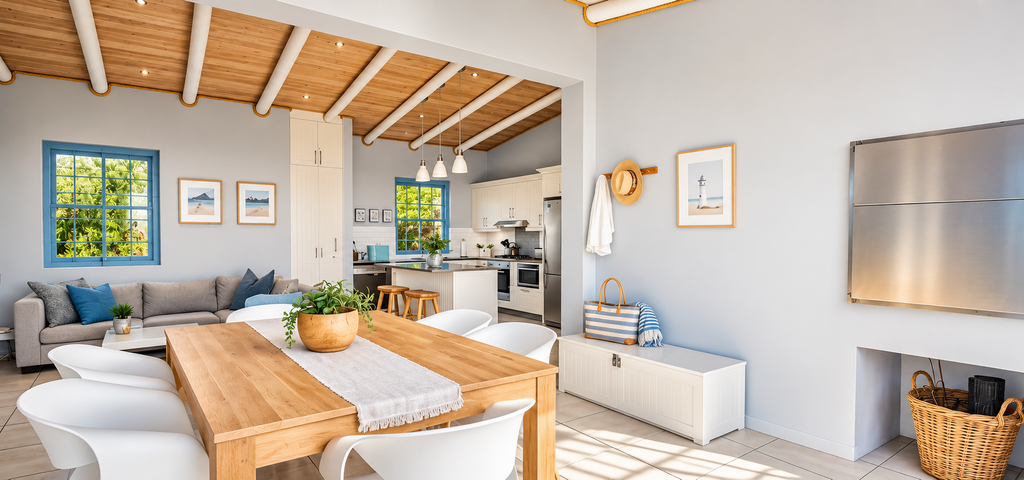
Accommodation in the village is mostly small-scale: guesthouses, B&Bs and self-catering cottages, many within a short walk of the beach. For something simpler, Tietiesbaai in Cape Columbine Nature Reserve has 60 camping sites for tents, caravans and trailers. The access road is gravel and suitable for a standard sedan, but there is no electricity or site lighting. Facilities include flush toilets, solar-heated showers and water taps; bring your own braai. A maximum of six people is allowed per site, and pets are not permitted. Day visitors are admitted from 08:00 to 19:00. In-season runs from 1 November until Easter Monday, and sites for November to January are allocated from the end of August, so book ahead in writing the municipality does not accept telephone bookings. Transnet also offers self-catering accommodation at the lighthouse. Book early for December and January, when the village fills up for the school holidays.
Getting There
Paternoster is about 150 kilometres from Cape Town, typically around a two-hour drive. The usual route follows the R27 West Coast Road north, then the R45 towards Vredenburg and the R399 into the village. West Coast Way lists the distance as 149 kilometres; a current route from the city centre is about 151 kilometres and just under two hours, without long stops. From Vredenburg it is a short hop of about 15 to 16 kilometres.
Good to Know
Best time to visit. November is early summer: dry, bright and good for beach walks and the reserve. December and January are busier. Wildflower season on the West Coast is usually August and September, so don’t come in November expecting a floral display. If flowers are what you’re after, plan a spring trip with our West Coast wildflower guide, which includes Paternoster on the route.
The Atlantic is cold year-round. Swim with care, watch the rocks and the surf, and never assume there will be a lifeguard.
Tietiesbaai rules. The speed limit inside the reserve is 20 km/h. Vehicles are not allowed on the beach, and rubber ducks may not be launched at Tietiesbaai. The municipality recommends a chemical toilet for overnight camping. Entrance is at your own risk.
Lighthouse visits. Opening hours are weekdays only, 10:00 to 15:00, excluding public holidays. Confirm before you set out.
Permits. If you hope to catch crayfish, you need a valid permit, including inside the reserve.
Wind and sun. The West Coast is known for dry countryside and strong winds. Pack a hat, sunscreen and a windbreaker, even in summer.
Fun Facts
The name Paternoster is Latin for “Our Father”. A widely told story links it to prayers said by Portuguese seamen, and Transnet still uses that explanation, though the origin of the name is not settled.
Cape Columbine Lighthouse takes its name from the barque Columbine, wrecked in the area in 1829. The coastline is known for submerged rocks and reefs, and both Transnet and Saldanha Bay Municipality note that the light is usually the first South African lighthouse seen by ships arriving from Europe. Transnet also mentions shipping from South America. The lighthouse is protected under the National Heritage Resources Act.
At the 2011 census, the main place of Paternoster had 1,971 residents across 2.49 square kilometres — a reminder that this is still a small community, even as visitors arrive.
Paternoster is a small village with a very long view. It’s where a morning walk might start among whitewashed walls and end with a fishing boat being pulled up the sand, and where the day can close under a lighthouse beam on the edge of the Atlantic. Go now for the early-summer light, the seafood and a night of West Coast quiet, and you’ll understand why this little fishing village is one of the most distinctive places on the Cape coast to Xplore.
Read more: South Africa’s Beach Cities: The Full Coastal Guide, which includes Paternoster among the quieter West Coast stops.