By Ntambo Mabuza
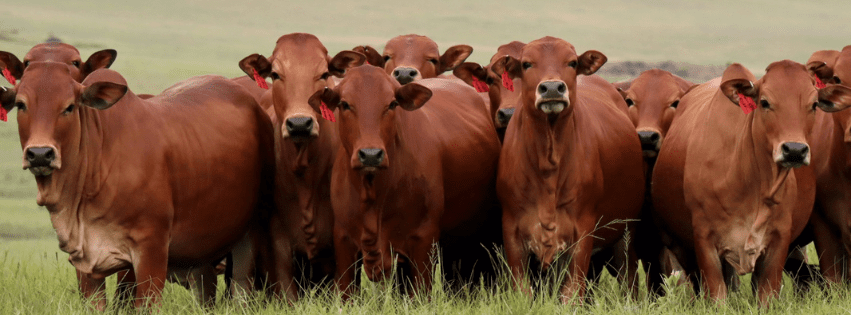
I can’t remember where I heard it — whether on the radio or came across it on social media — but someone once drew a simple, yet striking, distinction between keeping cattle and breeding them. She said, “Kept cattle are just that — kept.” They’re turned loose on the veld to fend for themselves, with little more than hope that they’ll multiply and fill the earth.

Breeding cattle, on the other hand, is a more hands-on affair. The farmer watches over them constantly—tracking their diet, weight, and any signs of disease. But as Dr Ben Greyling of the Agricultural Research Council (ARC) points out, not everything is visible to the naked eye. That’s where science and technology come in—tools honed over the 10 000 years since humans first domesticated cattle and began shaping their genes.
Ironically, Dr Greyling, a molecular geneticist, seems uneasy with the “electronic technology” of virtual presentations. Like most farmers, his grasp of science and tech is more grounded than the heady promise of artificial intelligence. But the other AI—artificial insemination—is something he handles with ease.
One of the more surprising facts from Dr Greyling’s Red Meat Industry Services (RMIS) webinar is that, genetically, one cow is very much like another. The genome of an Afrikaner and a Nguni cow, for instance, is 99% identical. It’s the remaining 1% that accounts for traits, talents, and the terrain-specific adaptations that make each animal unique.
“Individual animals—and humans—can share a high degree of genetic similarity but still show significant phenotypic (observable trait) differences,” Dr Greyling explains.


Ultimately, key performance indicators like fertility, feed conversion, growth, and disease resistance come down to a “complex interplay between genes and environment”—the classic nature-versus-nurture dynamic. Like with humans, what gets passed on to calves is a genetic lottery. A calf might inherit poor traits—or a lucky combination of genius genes. But, Dr Ben Greyling argues, science and technology can take much of the guesswork out of the breeding process.
Another fun fact: There are around 250 recognised cattle breeds worldwide. South Africa boasts an impressive genetic diversity, thanks to its mix of indigenous and synthetic breeds. Yet, paradoxically, this diversity doesn’t always translate into productivity.
According to Dr Greyling, the nation’s herd is “not productive enough”, which is a result of “under-performing and non-profitable animals due to poor or sub-optimal genetic potential.” “If we want to improve the herd,” he says, “we have to consider both the genetics and the environment influencing those traits.”

A single mating between a well-bred bull and a cow can yield a calf with millions—if not trillions—of potential genetic combinations. This highlights the importance of stud breeders in spreading top-tier genetics across the national herd. It also explains why farmers are willing to pay a premium for superior animals.
In 2023, a Bonsmara bull sold for a record-breaking R4.4 million, while another fetched R55,000 at the Glendor Bonsmara production auction in 2024.

Still, even perfect genes aren’t enough. Productivity hinges on the environment the farmer creates. Although tools to support breeding goals are readily available through institutions like the ARC, Dr Ben Greyling remains concerned about the widespread lack of rigorous performance recording among farmers, which continues to undermine progress in the sector.
Dr Greyling’s presentation is packed with data that shows the correlation between genetics and productivity, but it’s too detailed to list here. Every R1 spent on scientific technologies and basic performance recording has been shown to yield as much as R18 in cost savings or profits, he explains.
In the end, making the leap from just keeping cattle to truly breeding them means focusing on more than just the herd—it’s about tracking fertility, growth, feed efficiency, and health with the help of basic tools like digital records, radio frequency identification (RFID) tags, mobile scales, and AI (the insemination kind).

The technology’s already here, and it doesn’t need to be flashy to be effective—or expensive. A visit to the ARC website reveals a treasure trove of information and knowledge, which is freely accessible. Moreover, the government runs several programmes in support of cattle breeders, such as the National Beef Recording and Improvement Scheme and the Bovine Genomics Programme, a breeding initiative aimed at improving cattle genetics.
Listening to Dr Greyling, it’s somewhat flattering to think that all this effort is for the welfare of our cattle—because a happy cow makes a happy farmer. But, as he says, without a culture of consistent performance recording and follow-through, even the best genes and smartest science won’t move the herd forward.
“As scientists, we learn more from farmers than they do from us. This is because the performance data and information generated by farmers forms the basis of the scientific innovations used by the industry,” Dr Greyling concludes.