By Aurelia Mbokazi-Kashe
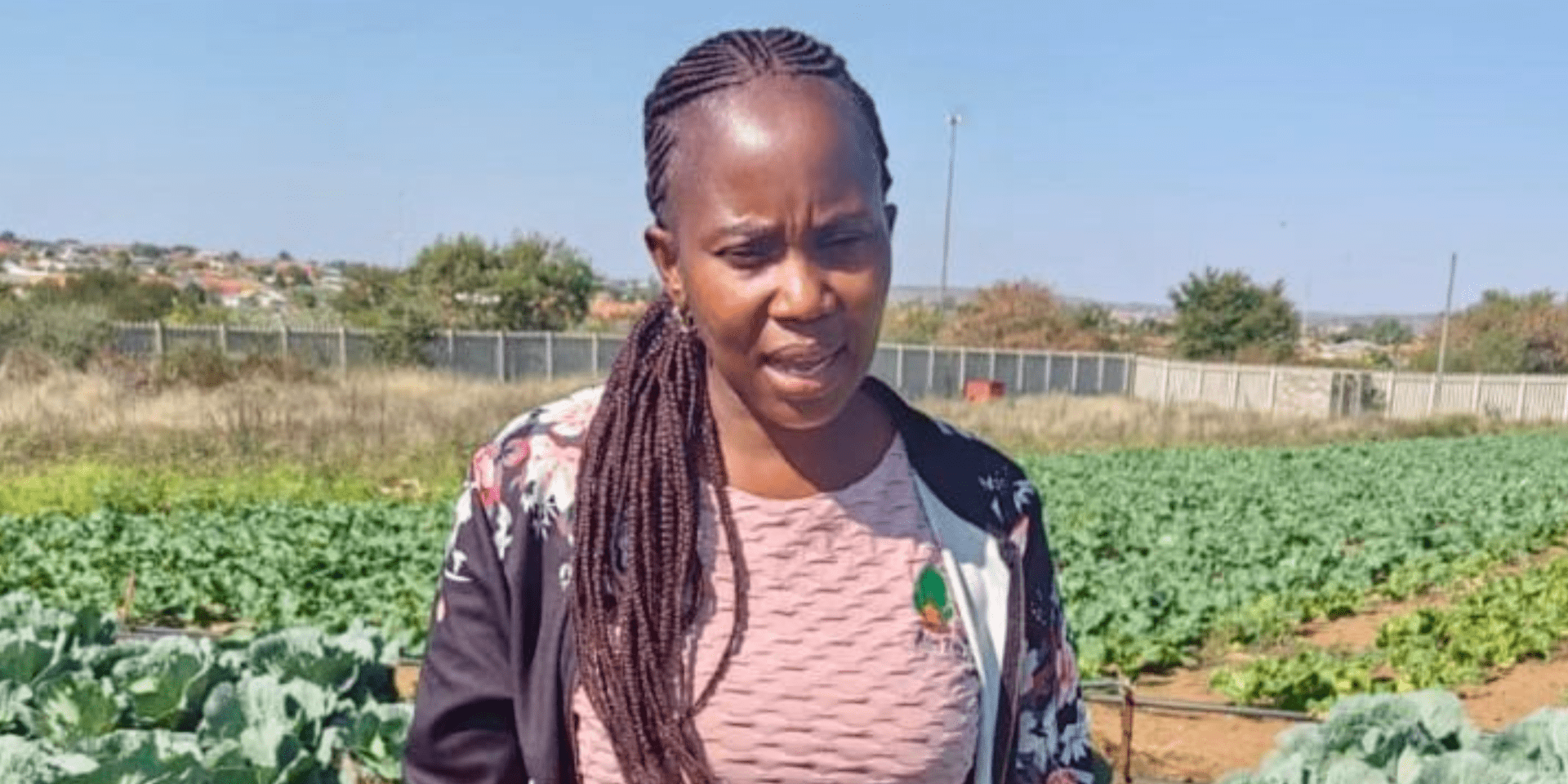
Dimakatso Dorah Mathebe, founder of Eden Farming and Projects, left her job as a primary school teacher to follow her true passion—farming. What began as hawking vegetables grew into a thriving agribusiness. With support from the City of Tshwane and GDARD, she now farms on 8.5 hectares in Soshanguve and 14 hectares in Bosplaas, feeding communities and building a lasting legacy.

Beginnings
Farming is my passion and I’m building a legacy one crop at a time. I started with
just one hectare planting spinach, and slowly expanded as more space and tunnels were made available to me. Today, I lease the entire 8.5-hectare Agri-Village, fully equipped with boreholes, JoJo tanks, tunnels and a multi-span. Over the years, I’ve received training in GAP, Plant Production, and Business Management, and support from both DALRRD and GDARD. In 2019, I bought 14 hectares in Bosplaas to grow even more — from tomatoes and peppers to spinach and cabbage. Despite delays during COVID, I managed to build 14 plastic tunnels and continue to grow. I’m currently receiving agro-processing training through TUT and further support with inputs.

Produce
I started with spinach. I did not know anything about spinach, and did not even know what spacing was in between the crops. I learned from doing. I was just experimenting with vegetables. The first year, when I started with tomatoes, I did not sell even one tomato. I had not sprayed, I was learning, and pests killed everything. The following year I sprayed and got around 50% and it kept getting better and now I do it perfectly.
In Soshanguve, I grow China spinach, rape, spring onion, pumpkin and cabbage in the open field, while my seven tunnels are used for tomatoes, peppers, coriander and more spring onion on rotation. In Bosplaas, I focus on spinach and cabbage in the open land, and use tunnels for tomatoes, coriander, peppers and spring onion. I use a tractor from DALRRD for field work, and garden tools in the tunnels. I buy seedlings and also raise my own. I currently employ 10 permanent and 5 seasonal workers—eight have been with me since 2021.

Preparation
Before I plant, I always start with soil testing to check nutrients, moisture, and
temperature. I monitor acidity and apply lime if needed. I fertilise with 2:3:2 and top-dress using LAN, while also applying potassium nitrate, calcium nitrate, and a
hydroponic mix to support healthy growth. I follow cultivar guidelines to track crop development closely. For Cucumbers and Tomatoes, I use drip irrigation to avoid Powdery Mildew caused by humidity. I also use animal manure to help correct soil pH. For me, healthy soil means healthy crops, so I never stop learning and adjusting to improve my yields.
Irrigation
Water is precious, so we rely on boreholes and use drip irrigation to save every drop. In the tunnels and shade nets, we cultivate manually, and I make use of mulching to retain moisture and keep weeds under control. I’ve also planted baby corn, which is drought resistant—perfect for our climate. Crop rotation is a key part of my system; it helps manage pests and keeps the soil healthy. Every method I use is about working smarter, conserving resources, and making sure the land stays productive for years to come.

Market
Farming is a numbers game, but every sale tells a story of growth, planning, and
pushing boundaries. I supply my vegetables to outlets like Big Save Mabopane, Pick n’ Pay, Fruit and Veg, Spar, Nando’s, and even hawkers—three times a week, and sometimes on request.
Everything I grow is sold, and I’m grateful I’ve never had market issues. Weekly, I move about 400 – 600kg of coriander, 150 boxes of peppers, 1 500 bunches of spinach, and 500kg of rocket. Prices shift with the season, but it’s all part of the business. The profits I made in Soshanguve helped me buy and develop my second site in Bosplaas.
At my Bosplaas farm, I supply coriander to Eat Your Greens in Midrand and Tau
Fresh — about 200kg a week at R45 per kilo. In summer, I move 200 boxes of tomatoes weekly to Fruit & Veg and Big Save. Spinach goes to Big Save too, around 500 bunches at R10 each. I also sell spring onions at Tshwane and Joburg markets, 100 boxes weekly at R70 to R80 per box.
My cabbage, pumpkin, peppers, China spinach and rape( The rape plant is part of the kale, turnip and broccoli family and is mainly grown for its seeds) are sold weekly, mostly through Big Save and Tshwane Market. Prices vary, but demand stays steady.

Recognition
I’m honoured to have received the Next Generation Africa Women in Leadership
Award earlier this year (2025), presented by Sinayo Global and Kagiso Trust. This
award means a lot to me; it recognises the hard work, resilience, and sacrifices that come with building a business in agriculture as a woman. It’s not just about me, but about every woman who dares to lead, farm, and empower others in her community.
Empowerment
I believe in growing people as much as I grow crops. Whenever I attend training, I
take my team along, especially the farm manager, so they can pass the knowledge on to others at From Bosplaas to the market shelves — fresh coriander, tomatoes, spinach and more, harvested weekly and feeding the nation.
We all must learn and grow together. I’m also passionate about mentoring emerging farmers around Hammanskraal at no cost. Sharing what I’ve learnt helps strengthen our local farming community and builds a future for others like me. I also host students from different institutions who come to learn practical farming skills on my farm.

I have launched a grassroots initiative to support homestead gardens and small- scale farmers excluded from SFPSU and Rural Development support. In collaboration with Botshabelo Black Farmers NPO and Sefoko Makgatho, I donated seedlings to households in Ga-Rankuwa to help fight poverty. I am grateful extend gratitude to the City of Tshwane and Gauteng Department of Agriculture for supporting her efforts as a woman in farming.
Giving back is part of my journey. Every week, I donate spinach to Midi School for the Disabled in Soshanguve, and I’ve provided them with seedlings to start their own garden; something the children are actively involved in.
In Bosplaas, I donate vegetables once or twice a month to Sibongile Crèche and also support disadvantaged families in the area. I’m passionate about working with the youth and currently support a programme through Solidaridad that empowers them through agriculture. It’s about building communities and planting hope.
Challenges
Farmers in South Africa face serious challenges in accessing essential inputs, with concerns over the effectiveness and fairness of support programmes like the Soshanguve Farmer Production Support Unit (SFPSU). Some active farmers struggle to get assistance, while non-productive farmers reportedly receive resources and misuse them.
I was unfairly expelled from the SFPSU after helping other farmers access
production inputs. Another case in point is the delayed use of an SFPSU bakkie,
which was parked for six months and was only used after I protested on social media to exert public pressure.
There are also instances where struggling, operational farmers, such as those needing boreholes, are overlooked. Stakeholders urge Rural Development to prioritise genuine, productive farmers to ensure sustainability and prevent further farming failures.
To contact Eden Farming and Project, call 0768276658 or email dorahmathebe1@gmail.com