By Lilac Nachun
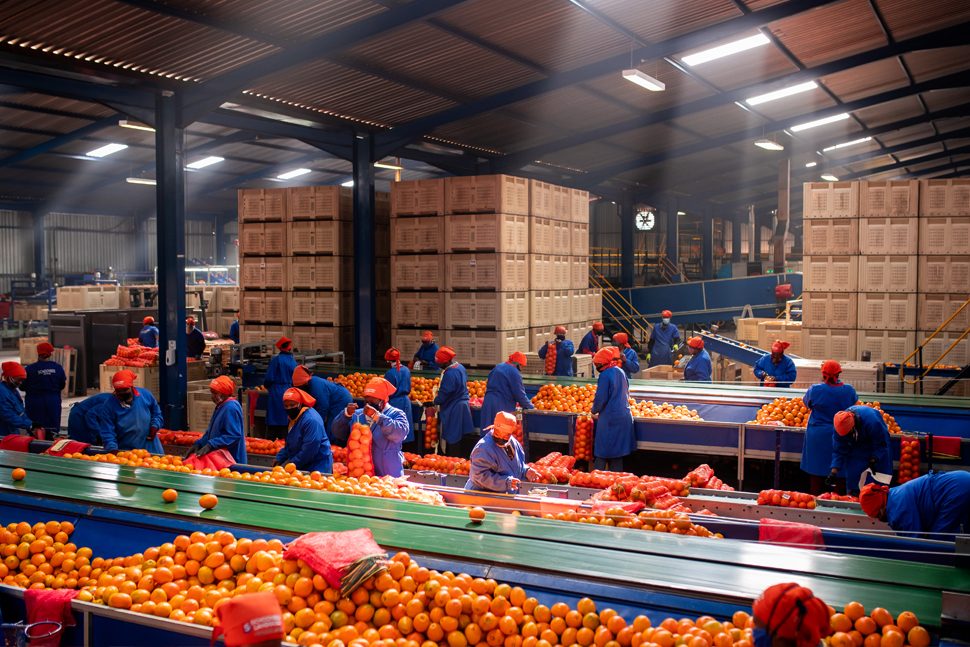
A week ago, South Africa celebrated a major win. The Minister of Agriculture, John Steenhuisen, applauded the citrus industry for achieving export records, 203.4 million cartons shipped to global markets in the 2025 season, a 22% jump from last year and a clear signal of what’s possible when strategy, resilience and industry collaboration align.
But while South Africa’s citrus story shines, it also highlights a far more urgent, continental question: If one African industry can surge ahead, why isn’t the rest of the continent keeping pace?Despite being one of the world’s most richly endowed agricultural regions, Africa still struggles to translate potential into export power. Nachun argues that this paradox lies at the heart of the continent’s development challenge.
Land
Africa holds almost half of the world’s usable land, much of it suitable for crops. Large areas are neither protected nor forested and have low population density. The continent’s climate can support about 80% of the food types consumed globally. In theory, these conditions should make Africa a strong agricultural exporter. Yet the opposite is true. Africa’s share of global agricultural exports is the lowest of any region, dropping from around 8% in 1960 to just 4% in the early 2020s, according to World Bank data.
Policymakers have often overlooked agribusiness export performance, with a few exceptions such as Kenya and Ghana. Agribusiness covers everything from production and processing to distribution and marketing. Despite being the biggest contributor to GDP and employment, it receives a very small portion of public spending — on average only 4%. Some countries, like Mali and South Sudan, allocate more (8% and 7% respectively), while others, including Kenya and Ghana, spend less than 3%. Many governments have instead placed their focus on manufacturing as their preferred route to global integration.
Drawing on more than 30 years of research, consulting and teaching on global markets and development, I argue that agriculture could drive Africa’s integration into the world economy. To achieve this, four key reforms are needed: better access to capital, proper land documentation, targeted cross-border policies, and a more strategic use of trade policy. With these reforms, Africa could leverage its natural advantages to achieve broad-based economic growth and strengthen its position in global value chains.
Four reforms to support agribusiness
1. Improve access to capital
A lack of capital remains one of the biggest obstacles facing African agribusiness. Banks are hesitant to lend because agriculture is seen as high risk, requires long-term investment, and often lacks solid collateral. As a result, agriculture receives only about 1% of commercial lending, even though it contributes 25% – 40% of GDP in many countries, and up to 60% in Nigeria and Ethiopia. In places like Uganda, lending rates to the sector are double the national average.

Governments can help close this gap. In 2024, Kenya invested US$7.7 million to boost its tea sector. Local investment can also reduce costly food imports: Nigeria’s Tomato Jos project cut annual tomato paste imports by US$360 million. One effective approach is expanding public lending while encouraging private sector finance through risk-sharing schemes. South Africa’s Khula Credit Guarantee Scheme shows how government guarantees can unlock loans for farmers with limited collateral, a model now replicated in Kenya and Tanzania with support from the EU and development banks. Private funding is also rising. In 2024, Nigeria and South Africa each secured around US$500 million in venture capital. African startups funded through these channels are growing six times faster than the global average, and micro-lending platforms across the continent have now issued more than US$8.5 billion in loans.
2. Document the land
More than 80% of Africa’s arable land is undocumented and managed through customary systems that are not well aligned with formal law. Weak land administration discourages investment and limits farmers’ ability to use land as collateral. Land transfers also cost twice as much and take twice as long as in OECD countries, making it harder to access credit and scale production for export.
Recent reforms across the continent show the value of proper land documentation. Ethiopia issued certificates to 20 million smallholders, increasing rental activity. In Malawi, reallocating 15 000 hectares lifted household incomes by 40%. Mozambique, Uganda and Liberia strengthened customary institutions to support formal land contracts, while Rwanda’s national land-mapping programme improved transparency and encouraged investment.
3. Design focused cross-border policies
Successful exports require different strategies for regional and global markets. Intra-African trade benefits from geographical proximity and smoother regulations. A good example is the East African Community, where trade facilitation reforms helped dairy exports grow 65-fold in just ten years.

However, most African agricultural products are sold outside the continent. Competing in these markets demands strong infrastructure and reliable logistics to maintain speed and quality. Senegal, for instance, increased its exports by 20% a year after investing in high-speed shipping.Ethiopia’s flower industry also grew rapidly thanks to its air-transport network and cold-chain systems. Policies must also be tailored to specific crops. Kenya’s focused avocado strategy made it Africa’s largest exporter, with consistent double-digit growth. Mali used a targeted approach to build a competitive mango value chain that now serves European markets.
4. Use trade policy as a tool for upgrading
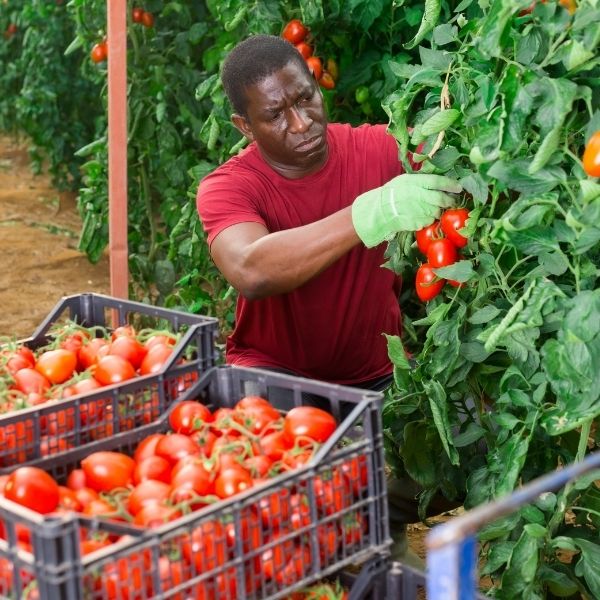
Many African exporters still sell raw, low-value products. Nigeria is a major tomato producer, yet exports almost everything unprocessed and then imports tomato paste. In Kenya, less than 5% of its leading export, tea, is sold as a branded, value-added product. Smart trade policy can help shift this balance by encouraging more local processing.
The East African Community shows how this can work. Its differentiated tariff structure reduced duties on intermediate goods while protecting local food processing, successfully promoting value addition. Governments can also use taxes or restrictions on unprocessed exports to push industries towards upgrading. But policy alone is not enough; countries must also invest in processing capacity. Attempts by Botswana, Uganda and Côte d’Ivoire to ban raw exports delivered limited results because the right infrastructure and support systems were not yet in place.
A decisive shift
Africa’s agribusiness sector holds enormous untapped potential for real economic transformation. With vast land, a favourable climate and fast-growing local demand, the continent has clear comparative advantages. It is also becoming better equipped to tackle the long-standing barriers that have held agribusiness back.

This article outlines a policy agenda aimed at reversing Africa’s falling share of global agricultural trade by addressing the institutional weaknesses that limit competitiveness. The agenda centres on four priorities: improving access to finance, formalising land rights, introducing targeted cross-border measures, and using trade policy to encourage value addition. A decisive shift towards an agriculture-led development strategy is essential. By implementing these reforms, African countries can strengthen their economies — both domestically and within global markets.
Lilac Nachum, a Visiting Professor at Strathmore University, is a Fellow of the Academy of International Business and has spent more than three decades teaching, consulting and publishing in the field, while serving on the leadership team of the Academy’s Africa Chapter.