

Joburg to Durban is roughly six hours on the map. With children in the back seat it is closer to a character-building expedition. Here is how to arrive with everyone still speaking to each other on your next long drive with kids.
- 2 hrs – the longest stretch to go between proper stops
- 1 bag – of snacks per child, packed within arm’s reach
- 0 – streaming shows that work reliably between towns
Every South African family knows the December ritual. The boot is packed to the roof, someone has forgotten the one thing that mattered, and forty minutes past the Heidelberg turn-off a small voice asks the question. You know the one.
A long drive is less about the destination and more about logistics, bribery and timing. Get those three right and the N1, N2 or N3 becomes part of the holiday instead of the price you pay for it. For more, see our essential travel tips for South African families.
Plan your long drive with kids around the smallest bladder
Your route is only as long as your youngest passenger’s patience. Build the day around them, not around the GPS estimate.
- Leave early or leave at nap time. A child asleep for the first two hours is the best fuel-saving device ever invented.
- Stop every two hours, even if nobody asks. Choose stops with a patch of lawn or a playground, not just a forecourt and a vending machine. Ten minutes of running about buys you another hour of calm.
- Plan stops in advance. Looking for a clean bathroom at 120 km/h is not a strategy.
- Arrive before dark. Tired kids and unfamiliar gates do not mix, and neither do tired drivers and unlit roads.
Check the car before you check the kids
Breaking down is annoying on your own. With three children and a flat cooler bag it is a different category of event.
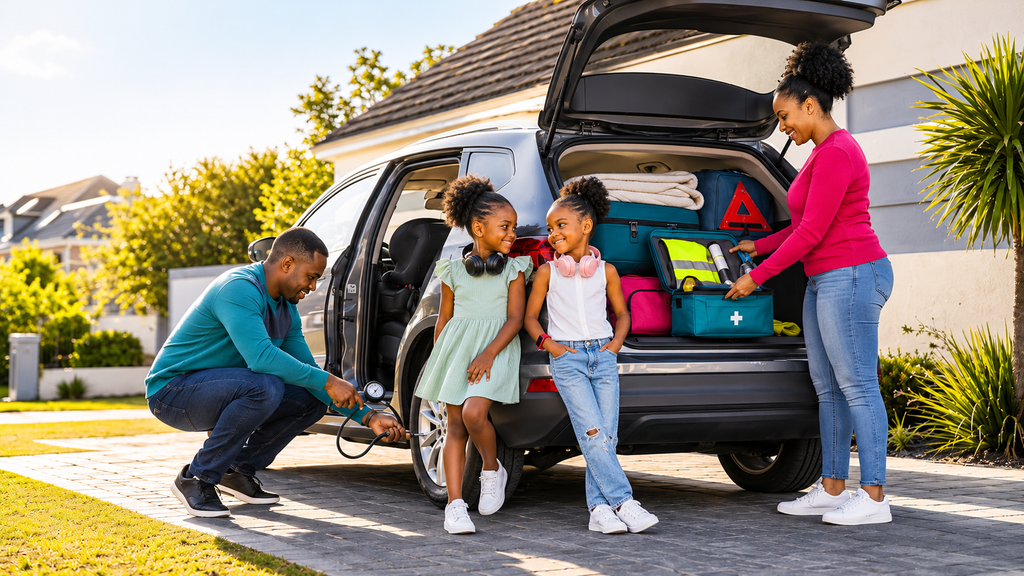
- Tyres, including the spare, plus oil, water, wipers and aircon.
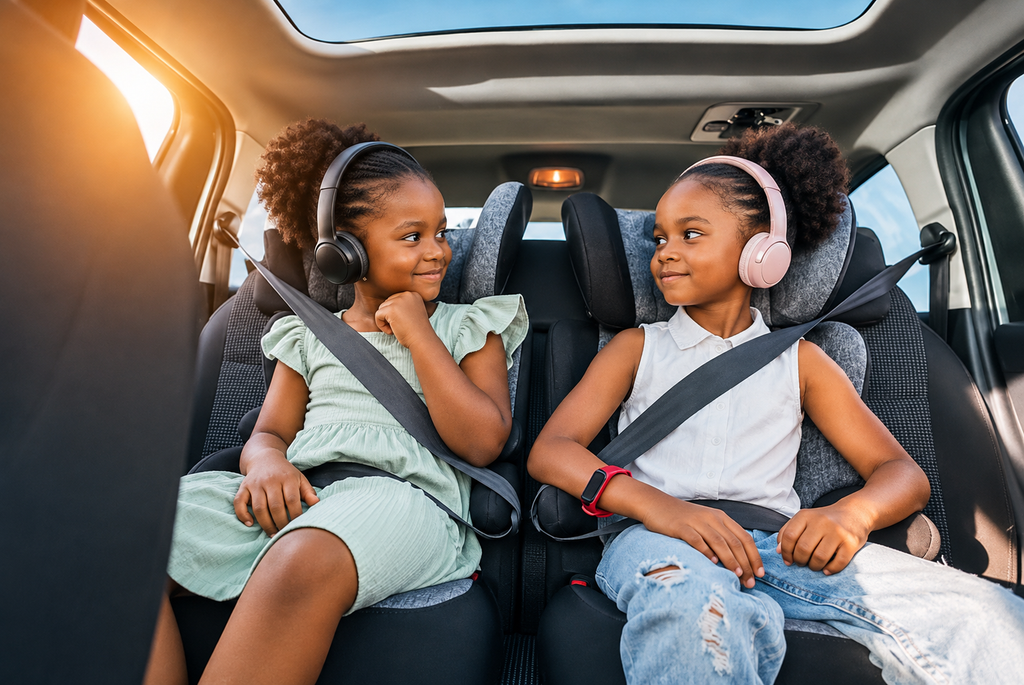
- Child seats fitted properly for each child’s age and size. Check the current rules and the seat manufacturer’s guidance, and do not wing this one.
- Window sunshades for the back seat. They are cheap, and they save arguments about whose side the sun is on.
- A warning triangle, jumper cables, a torch and a charged power bank for the driver’s phone.
The snack bag that saves the day
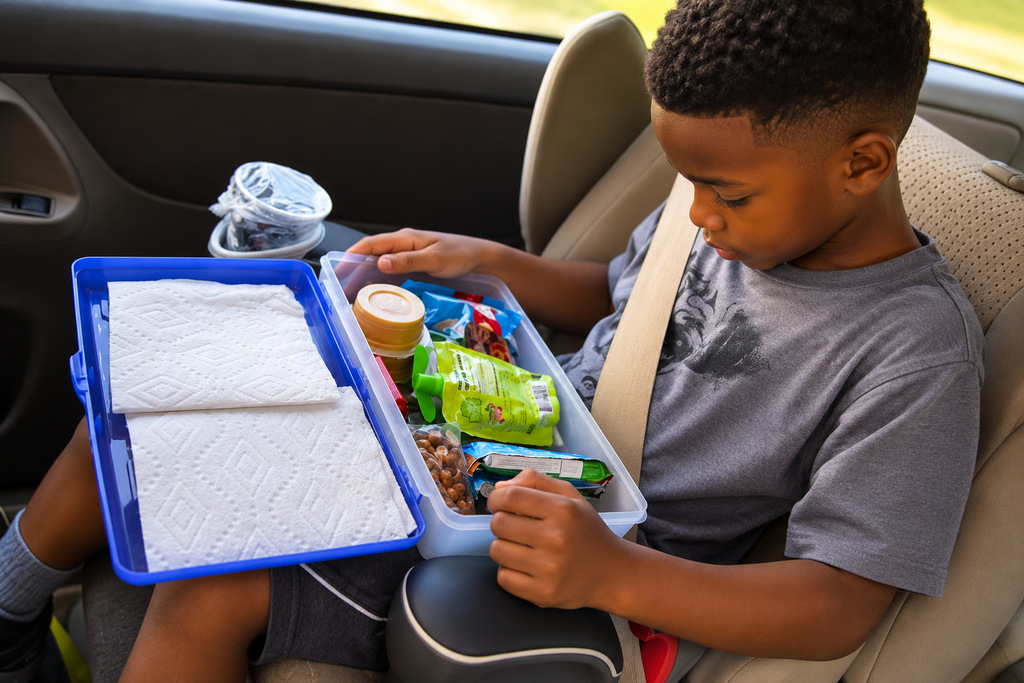
Give each child their own small bag, keep it in the cabin and fill it with food that is dry, quiet and low on mess.
- Rice cakes, dry cereal, crackers, dried fruit, apples and cheese cubes in a cooler bag.
- Biltong sticks for the older ones, assuming nobody in the car has opinions about the smell.
- A refillable bottle each, with a lid that actually closes.
- Wet wipes, a roll of bin bags and one spare T-shirt per child, kept where you can reach them.
- Skip the chocolate in summer. It will melt into the upholstery by Harrismith, and you will be finding it in March.
Download it, do not stream it
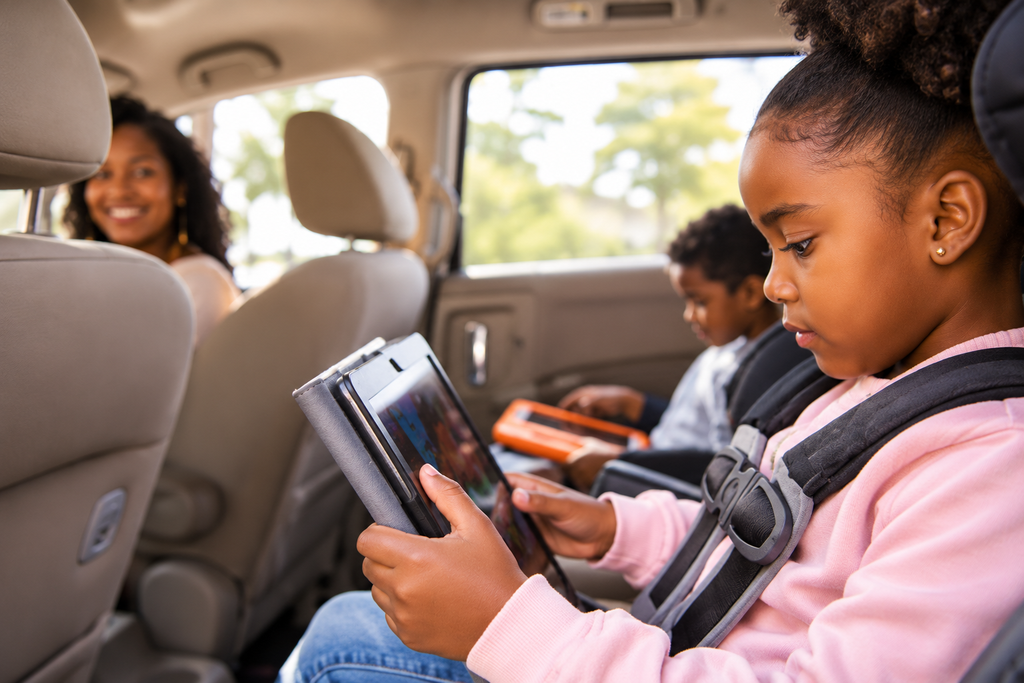
Signal drops without warning on long stretches of our national roads, usually at the exact moment a cartoon reaches its ending. Load everything onto devices at home.
- Downloaded episodes, playlists and audiobooks. A good story read aloud keeps a whole back seat quiet, parents included.
- Headphones for each child, volume-limited if your devices allow it.
- Screen-free options as well: colouring on clipboards, sticker books, magnetic games and a notebook for each child.
- A surprise bag of small, cheap items, handed out one per hour. Unwrapped kids are just kids. Wrapped kids are suddenly very interested in the clock.
Turn the road into a lesson (without calling it one)
Kids learn plenty on a road trip as long as nobody announces that class has started.
- Number plate bingo. Spot a plate from every province you can. A “CA” in Gauteng is a small victory, an “ND” is a celebration.
- Roadside geography. Let the oldest child navigate with a paper map or a map app and call out the next town.
- Name that animal. Cattle, kudu, secretary birds and jackal buzzards all make appearances if you let the window game run long enough.
The “it all went wrong” pouch
Every long drive has one moment. Pack so that the moment is a five-minute inconvenience and not a ruined afternoon.
- Spare clothes for each child in a bag that stays in the cabin, not buried in the boot.
- Plasters, antiseptic wipes, sunscreen and any regular medication your child needs, in a labelled bag.
- A plan for car sickness: seat the child facing forward, crack a window, keep the car cool, and ask your pharmacist about suitable options for their age before you leave.
- A blanket or two, because boot-air and aircon get cold fast when a child has finally fallen asleep.
Documents, cash and the dull but essential bits
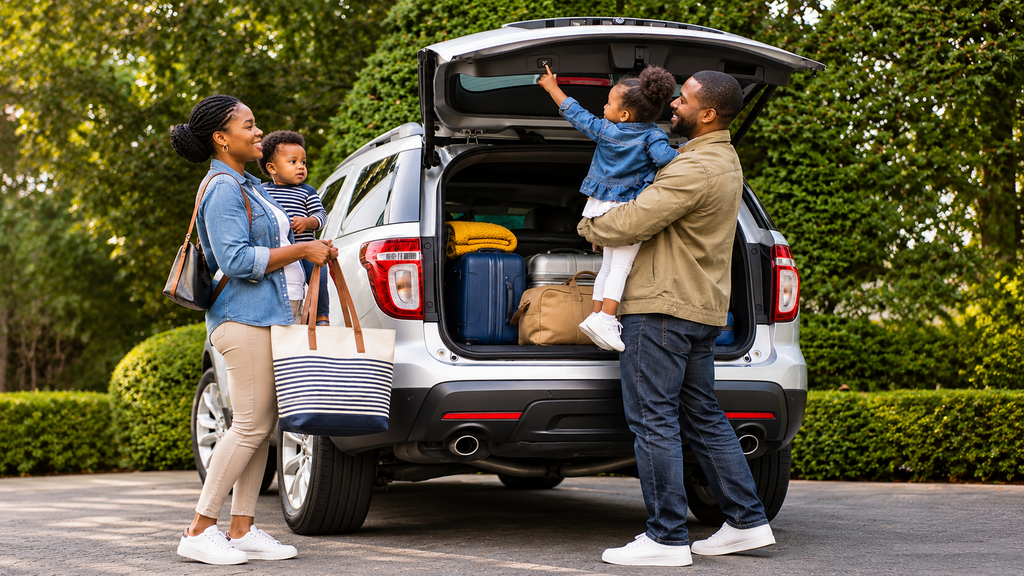
- IDs, accommodation confirmations and your insurance details in one easy-to-reach folder.
- Cash and a working card for tolls, fuel and the car guard who watched your car for exactly four minutes.
- Crossing a border? Check the current rules for travelling with minors, including what documents you need for each child.
- A shared note of emergency contacts, plus the address of your first night’s stay.
Do all this and the drive stops being the thing you survive on the way to your holiday. It becomes the first chapter of it, complete with a ridiculous story or two that your kids will be retelling at Christmas lunch in ten years.
Got the car packed?
Find your next family-friendly getaway, road-trip route and weekend escape on XploreZA.