By Ntambo Mabuza
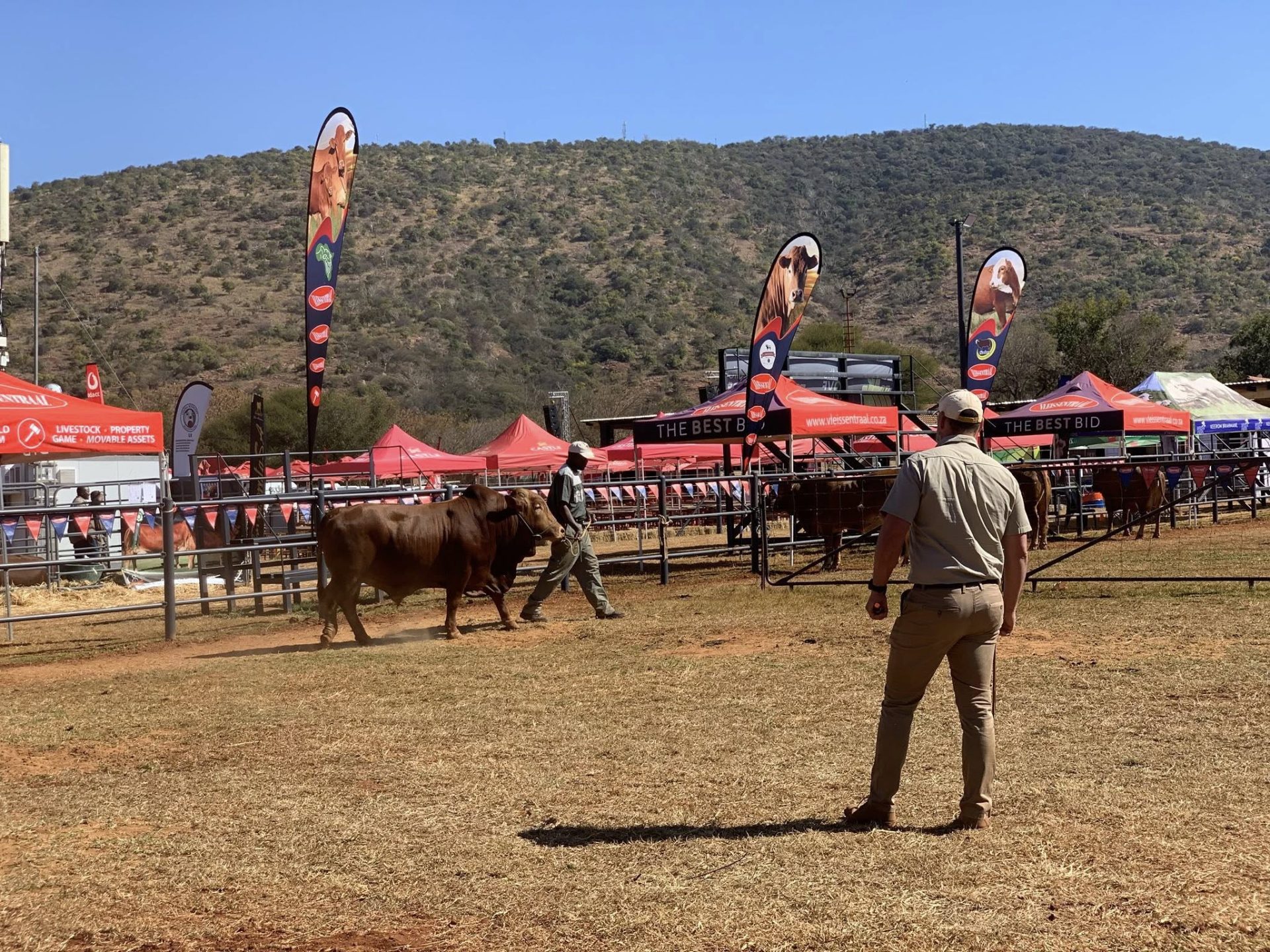
At the end of July, I attended the Agricultural Research Council’s (ARC) Beef School in Thabazimbi — a town known for its iron mining, farming and tourism. The training was hosted at the Thabazimbi Showgrounds and ran alongside the annual Agricultural Expo, a showcase of the region’s farming heritage and economic strength. “Thabazimbi” translates to Iron Mountain — a nod to its mining roots. Nestled between Gauteng and North West, and just a drive from Botswana, the town is a fitting backdrop for a gathering that celebrates both tradition and progress in agriculture.
Journey to the “Iron Mountain”
Driving from Tshwane along the R511 reveals the natural wonders of the Bushveld against the rolling backdrop of the Waterberg Mountain ranges. Fields stretch ahead, broken by dozens of centre-pivot irrigation system that look like a child’s scattered toys. Depending on their size and brand, each of these pivots can cost anywhere from thousands to millions of rand.

However, the sweeping views fade the moment you pass the “Welcome to Thabazimbi” sign. Urban sprawl quickly takes over, shaped by surplus mining and agricultural labour. Informal settlements and roadside trading stalls line the road, a sharp contrast to the open Bushveld. Less than two kilometres ahead lies my destination; the 69th Thabazimbi Agricultural Show, already buzzing with life at the town’s showgrounds. Weather-beaten bakkies and high-end “Die Nuwe” Toyota workhorses lining the street signal that farmers have turned up in force.
Inside, the show bursts with colour; stalls selling everything from sticky koeksisters to finely crafted leatherware sit alongside gleaming Landini tractors and prize livestock. It’s a place where the old rubs shoulders with the new, and heritage meets tech innovation.

The Heat Is On
At the 2025 Beef School, hosted by the ARC and the Bushveld Kalahari Afrikaner Cattle Study Group, farmers, researchers and agri-businesses gather with a shared mission: to save the world, one cow at a time, as climate change becomes impossible to ignore. Back in the 1980s, the “greenhouse effect” began creeping into public consciousness.

Chlorofluorocarbons (CFCs) — the very gases that cooled our homes, powered fridges and sprayed from deodorant cans — were soon outed as culprits.
They weren’t just chewing holes in the ozone layer, but also trapping heat and fuelling global warming. As the Beef School programme kicks off, there’s no climate change scepticism in sight inside the showground hall.
Farmers here live with its reality every day. A single cow needs between five and ten hectares for sustainable breeding, yet land is shrinking and losing nutrients. Feeding a growing population has never been tougher.

Shifting and unpredictable weather patterns only add to the pressure, making it nearly impossible to plan for seasonal diseases. The result? Rising veterinary costs that eat into already thin margins. “Climate change poses a significant challenge to livestock production — from altering feed quality and availability to increasing disease prevalence,” notes Mr Joel Mamabolo from the National Department of Agriculture.
The ARC scientists on hand bring the hard data to back it up. Rising temperatures are directly linked to falling semen counts in bulls — the very foundation of the beef value chain, explains Professor Michiel Scholtz. “A single day of heat stress can damage a bull’s semen, affecting fertility for up to eight weeks,” he says.

Heatwaves don’t just impact bulls; they also trigger early embryonic mortality in cows. Then there’s Heartwater Disease, spread by the Bont Tick, which thrives in unusual temperature spikes. “It’s a killer,” says Dr Lea Finkler, noting symptoms that include fevers above 40°C, diarrhoea, laboured breathing, and a staggering walk that can end in seizures.

Though Bont Ticks rely on livestock to survive, they spend 90% of their life cycle in the environment — thriving in heat, humidity, and rainfall. Once a seasonal nuisance in early summer and largely confined to parts of the north-eastern coast, the past two decades have seen them creep steadily inland.
“By 2065, the eastern and central regions of South Africa will be covered in Bont Ticks,” warns Dr Lea Finkler. “Climate change is driving higher temperatures and heavier rains, creating the perfect breeding ground.”
For now, the industry leans on familiar defences — controlling livestock movement, dipping, and vaccines. But as Dr Finkler makes clear, these are short-term fixes. The scale of the challenge calls for deeper, more lasting interventions.

Prof Linky Makgahlela, a scientist at the ARC, believes resilience starts in the breeding cow — one that calves every year, delivers quality milk and meat, and thrives even in tough conditions. She argues that herds can be strengthened for climate resilience by selecting the right traits and using genomics. But she also points to something often overlooked: the value of indigenous knowledge systems and cultural practices that have quietly sustained farming for generations.

The Afrikaner Comeback
Ancient, hardy and highly adaptable, Afrikaner cattle seem to tick all the boxes of a resilient breed; exactly the kind Professor Makgahlela champions. With roots tracing back nearly 400 years to the Khoi, the Afrikaner became central to early Afrikaner culture and the agrarian economy, officially recognised with the founding of the Afrikaner Cattle Breeder’s Society in 1912.
Yet, over time, the breed faced setbacks. Genetically weakened and culturally sidelined, Afrikaners lost out in the battle between draught power and mechanisation. They also fell out of favour at agricultural shows, where breeding focused on appearance over the breed’s natural productive traits.

Almost 40 years after the establishment of the Afrikaner Study Group—a collaboration between farmers and scientists—one of the breed’s staunchest advocates, Dr Pieter de Kock, takes us through a detailed look at how Afrikaner cattle perform against other breeds, score by score.

At the 2025 Thabazimbi Agricultural Show, we find ourselves unexpectedly cast as
judges for the best Afrikaner cow and bull. Around us, the curated line-up of Afrikaner cattle tells a powerful story—of a breed that has clawed its way back from the brink of extinction and now stands ready to face the challenges of climate change with resilience.

The moment is more than just about livestock. It’s a quiet reminder of what becomes possible when history and modernity, foresight and innovation, come together under one roof.