By Ntambo Mabuza
Calves are the true currency of cattle farming; each one born healthy and strong represents money on hooves. The way farmers manage calving season can ultimately determine the success or failure of their operation. In South Africa’s summer rainfall regions, calving typically takes place from August to October — a period when pastures are lush and feed is abundant. The natural grass provides the cow with enough nourishment to produce ample milk, giving the newborn calf the best possible start in life.

“Every calf born alive and healthy represents potential income. It can be sold
after weaning or kept to build the herd. The survival of each calf has a direct
impact on the farmer’s bottom line,” says Frans Dolamo, Livestock Technical
Advisor at Red Meat Industry Services (RMIS).
Spotting the signs of calving
As in most things in livestock farming, the calving season is not an isolated event. It is part of a chain of breeding practices that lead to this point in the production cycle, when a cow is ready to calve.
Since the calving season is planned through timed breeding, farmers should be familiar with the telltale signs of cows near calving.
These include the following:
Restlessness or the cow lying down more often than usual
Swelling of the vulva and discharge of clear or yellowish mucus
Raised tail and udder dripping milk

Assisting with a difficult birth
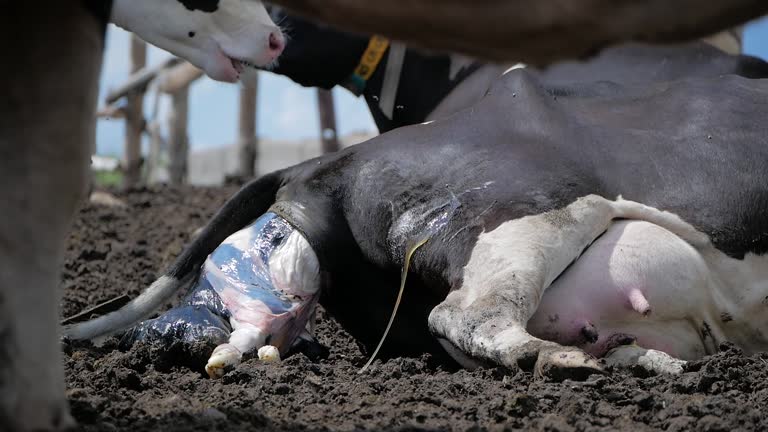
Under normal circumstances, cows should calve on their own within two hours. However, farmers must always be prepared to step in when complications arise.
Difficult births, or dystocia, are often caused by oversized calves, abnormal calf positioning, a small pelvic area in young heifers, or weak and prolonged labour. Beyond the risk of losing the calf, such complications can also injure the cow —sometimes permanently affecting her ability to breed or even leading to death.

“It’s not every calving that requires our intervention, but when we do step in, it
must be done correctly to save both the cow and her calf,” cautions RMIS Livestock Technical Advisor, Frans Dolamo.
When assistance is needed, the following principles are key:
- Ensure your hands and all equipment are thoroughly clean.
- Pull the calf gently, and only during contractions.
- If there’s no progress within 30 minutes, or if the calf is not positioned correctly, call a veterinarian or an experienced helper immediately.

The first 24 hours determine a calf’s future
What happens in the first twenty-four hours after birth can shape the calf’s entire future. According to Frans Dolamo, farmers must pay close attention during this critical period — watching the calf’s breathing, movement, and general vitality — while ensuring the following:
1. Make sure that the calf gets colostrum within two (2) hours: The first milk a cow produces after calving, colostrum, is nature’s superfood. It’s rich in antibodies, proteins, and nutrients that give the calf its first and only line of defence until its own immune system develops at around four months.
2. Dip the navel with iodine to prevent infection: The umbilical cord is a direct entry point for infection. Dipping it in iodine helps to seal off this pathway and protect the newborn from harmful bacteria.
3. Ensure that the calf stands and suckles: A healthy calf should be up and feeding within two hours. If it struggles, don’t wait — step in quickly. Not every calf is born strong, and a little help early on can make all the difference.

Helping weak or orphan calves
At times, a cow may have poor mothering instincts to care for its newborn calf, or it may not survive a rigorous birthing, leaving behind an orphaned calf. The RMIS Livestock
Technical Advisor proposes the following strategies:
Bottle feed colostrum or use milk replacer to boost immunity in the first 24 hours of birth.
Let another cow adopt the calf through fostering.
Protect the calf against inclement weather and keep it warm by providing shelter and dry bedding.

Nutrition of the cow after calving
The RMIS Livestock Technical Advisor reminds farmers that in the rush to care for newborn calves, the cow’s welfare is often overlooked. Yet, her recovery after calving is just as crucial. With calving season closely linked to the breeding season, ensuring that the cow regains her strength through proper nutrition supports both milk production and readiness for the next cycle.

“In about two to three months, that cow should be ready for breeding again. This keeps her on track to calve every year, and missing even one calving season could mean a serious financial setback,” says Frans Dolamo.
Tracking calving patterns through record keeping
A recurring theme in farmer support programmes is the importance of keeping detailed records for every animal. Accurate record keeping offers valuable insights into calving patterns, seasonal performance, and overall herd productivity; helping farmers anticipate challenges and measure profitability more effectively.
“Records are a goldmine, but unfortunately, many farmers still rely on memory instead of writing things down,” says the RMIS Livestock Technical Advisor. He adds that record keeping doesn’t require a fancy digital system — even a simple notebook and pen can reveal powerful information about the herd’s performance over time.