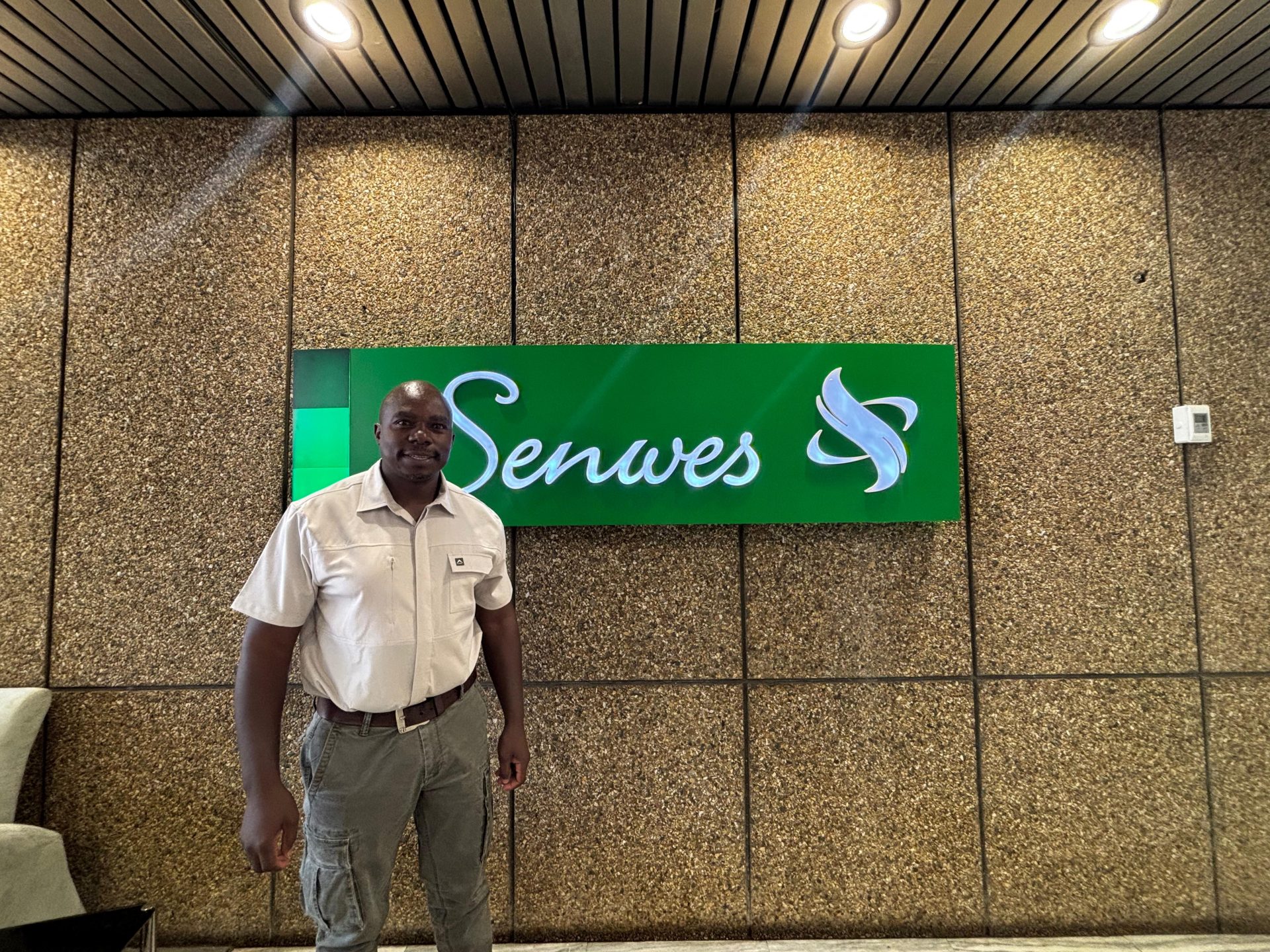
By Aurelia Mbokazi-Kashe
Julias Ramohlabi, agronomist and Head of Developing Agriculture at Senwes, opens up about his humble upbringing as the grandchild of farm labourers and his role in spearheading transformation in agriculture by ensuring that emerging black farmers have access to finance and technical support.
Tell us about your background and how you got to be the Head of Developing
Agriculture at Senwes?
I was born and raised on a farm in Zastron, a farming town in the Free State, where my grandfather worked as a farm labourer. I stayed behind with my grandparents when my parents moved to Botshabelo. When I eventually joined them, I would always return to the farm during school holidays to help with planting and other tasks. After finishing matric, I pursued a BTech in Agricultural Management, majoring in Animal and Plant Production, at the Central University of Technology.

My first job was in Standerton at Early Bird as a production supervisor for two years. I worked in an abattoir for two years, and the hours were long and I realised it wasn’t for me. In 2007, I joined Senwes as a junior agronomist. Within two years, I was promoted to agronomist and kept moving up and getting more responsibilities.
As the Head of Developing Agriculture at Senwes, I focus on business development,
especially assisting black farmers. Many of them received land through government
programmes but don’t have collateral, which makes it difficult for them to access funding from banks and agribusinesses like the Land Bank.

At Senwes, we made a decision to support them by offering finance even without
collateral, and that’s where I come in. I draw up a mechanisation plan that details how the land will be planted—what tractors and implements they’ll need, and what cultivation methods to use. Once there is a solid plan, I compile a production loan + application and motivate for them to the credit department. If a farmer is willing to offer something like livestock, an old tractor or property as security, it helps.

I also liaise with other stakeholders to find ways to support the farmers. Through these partnerships, we’re able to secure additional funding—sometimes for things like mechanisation through CAPAX. Working together, we can help finance essentials like tractors and provide more comprehensive support to the farmers.
How do you help farmers at Senwes?
I’m part of the Agri credit solutions (pty ) Ltd which is a subsidiary of Senwes. Senwes has a total of 212 branches across various business units, including retail branches, equipment workshops, silos, fuel stations, insurance branches, and other offices, according to M2North. This includes 64 retail branches, 42 equipment workshops, 83 silos, 37 fuel stations, and 15 insurance branches. Additionally, Senwes operates 36 branches under its Hinterland division, as stated by www.hinterland.co.za.

Once the farmers harvest, they sell their crops back to us. We deduct what they owe
and pay them the balance as profit. We’re also a John Deere dealership with over 30
branches, all with workshops to service and repair tractors when needed. We try to
make it easy and efficient for farmers to get everything they need in one place.
What are the challenges faced by emerging farmers and how do you solve these?
Farmers often lack ack production inputs, skills, or experience, so I assign a mentor to guide them, offering both technical and soft skills support. Some may understand business but lack technical knowledge, like calibrating a planter or applying inputs.
Our agronomists create a production plan, which we use to monitor progress.
We track crop growth, compile reports for the credit team, and address issues, such as delayed planting due to weather. Near harvest, we estimate yield to assess the farmer’s ability to repay the loan and make a profit.

What motivates you to help farmers succeed?
Helping people is my passion, and seeing them succeed keeps me motivated. We
recently partnered with other institutions in Pretoria on a project where 16 university
students are hosted on a farm for six months of training. They’re provided with
accommodation and meals, and I’m closely involved. I remember how hard it was to get practical experience when I was at university, so it means a lot to know they’re safe and getting the hands-on training they need.
With climate change and unpredictable weather patterns affecting farmers, how
can agronomic practices help mitigate these risks and improve resilience
We always encourage farmers to diversify. While our main focus is on financing grain production, we also provide secondary finance for livestock – but not as a standalone offering.

For young people considering a career in agriculture, particularly in agronomy,
what skills and qualities are essential for success?
We need more agronomists, especially young ones, because there’s so much
technology in agriculture today. In the past, we’d physically drive around a field to
measure it, but now we use apps that do it remotely. Technology also helps us deal with pest outbreaks – we can pinpoint the exact spot and act quickly before it spreads. Farming needs young people who can lead the way in using this kind of technology.

What excites you most about the future of agriculture in South Africa?
More black people are getting involved in agriculture, and we’re also seeing
professionals from corporate backgrounds investing in the sector. People are buying
farms and taking agriculture seriously. It’s no longer seen as something for those who couldn’t succeed elsewhere – we now have lawyers, accountants and auditors who also have a solid understanding of agronomy.