By Chef Mpho Charles
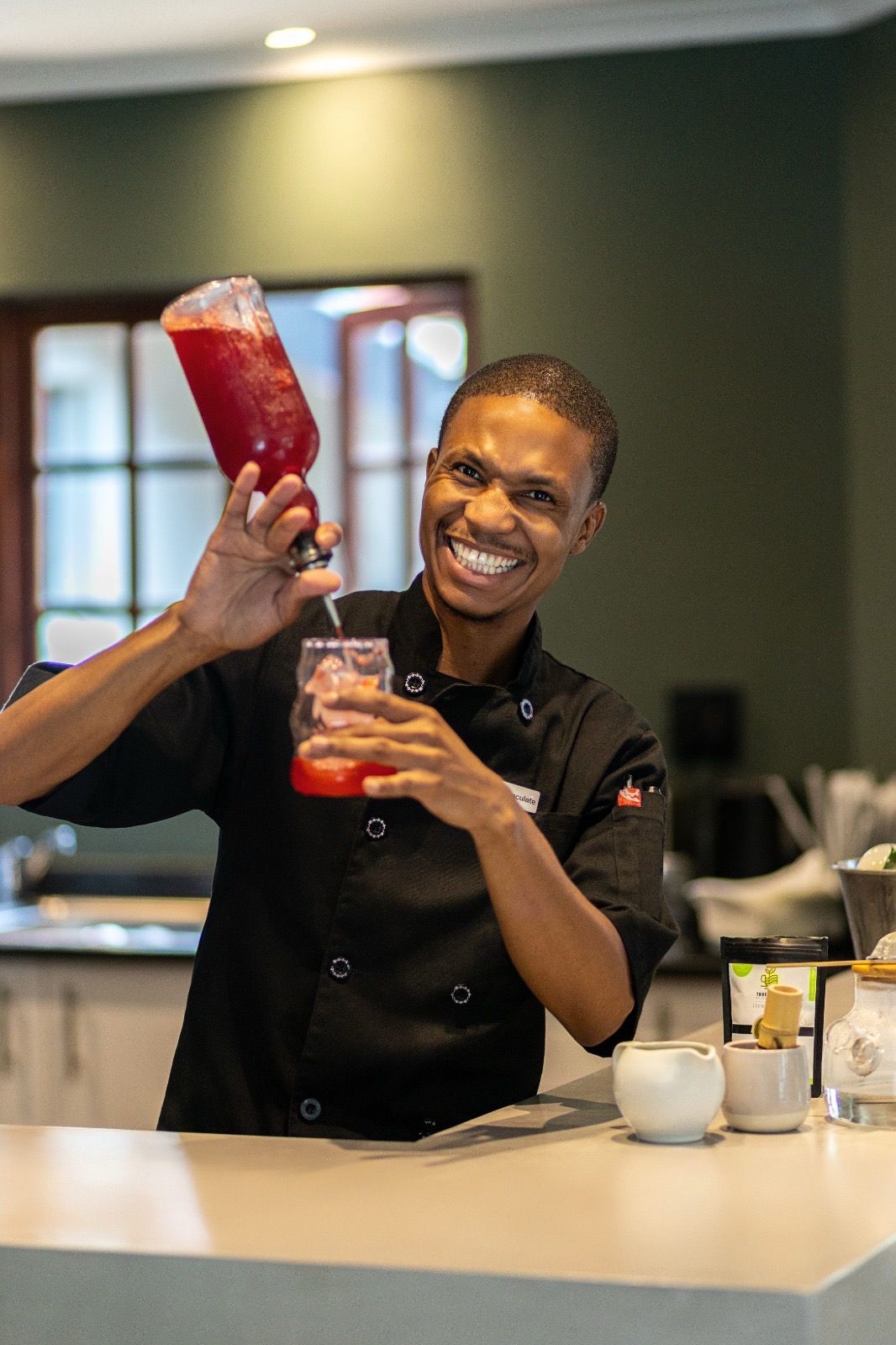
From law student to award-winning mixologist, Nhlanhla Immaculate Maguwa has + mastered the art of blending molecular gastronomy with classic bartending. Known as “Mr Devil in the Details”, his journey spans wine, cocktails, coffee, and tea. Now Assistant Operations Manager at Home Suite Hotel, in Rosebank – Johannesburg he continues to craft experiences with precision, passion, and purpose.

When people hear ‘mixologist,’ they often picture someone pouring drinks or
shaking up a cocktail. But your craft sounds far deeper. How did you discover this path, and what does being a mixologist truly mean?
When I started, I was the youngest, the last hire, and the only one without experience. I was seen as the bad hire, and I had everything to prove. I studied spirits, perfected syrups, and learnt to reinvent classics in countless ways. I didn’t want to be good; I wanted to be great. For me, being a mixologist isn’t just shaking drinks—it’s reading a room, listening, and crafting with intention. If it isn’t immaculate, I won’t serve it.

You describe your journey as one that began after leaving law studies at the
University of Pretoria (UP). How did that turning point shape the person and professional you are today?
Studying law was my dream, and walking away wasn’t easy. Yet it shaped who I am
today. Legal studies taught me to think critically, communicate clearly, and carry myself with confidence, skills I still use daily. I may not have finished the degree, but I sit with friends who did, and I’m the one recommending the wine. Losing that dream gave me a drive I can’t fully explain, one that fuels everything I do now.
From having no bar experience to being trained by Chef Chantel Dartnall and
Moses Magwaza, what was that learning curve like for you?
It was wild. I still remember making my first martini from a YouTube video; with a
customer waiting. We had no olives, so I used capers without knowing what they were. Chef Chantel was intense, teaching me to cook syrups and identify herbs by scent. Then Moses Magwaza challenged me with cellars of 75 000 bottles, creating mock sommelier tests. His belief in me and patient guidance gave me hope and the conviction that I could truly belong in this craft.
Many know you as someone who blends molecular gastronomy with classic
bartending. How would you describe your signature style in a glass?
Unorthodox! My style blends deep product knowledge with practicality, taking classics and flipping them on their head. Imagine a whiskey sour that looks and feels like the original, but with completely different ingredients. That’s what excites me. I don’t want to be ordinary. I want every drink to surprise you, spark curiosity, yet still make perfect sense.

The coffee competition in Kenya was a major highlight in your career. What did that experience teach you about innovation and standing out?
That trip changed everything for me. It was my first time flying, and I missed my flight, so I landed in Kenya feeling low on confidence. But instead of judgment, I was met with curiosity. They even changed the competition rules to give me more time. I shared my journey, performed a poem, and they added a mixology section to honour that moment. Kenya showed me that doing what you love with honesty makes you stand out.
People call you “Mr Devil in the Details.” What does that nickname mean to you in the context of your work?
When you show up with consistency and passion, people notice the little things. For me, it’s the precision – the garnish, the glass, the timing, even the energy I bring. Guests started saying my cocktails looked “immaculate,” then realised that’s actually my name. “Mr Devil in the Details” stuck. To me, it means never cutting corners. Every pour, stir, and welcome has to feel intentional. That’s how I honour the craft.

You speak passionately about service being more than monetary gain. Can you share a moment where you saw the transformative power of hospitality first-hand?
Absolutely. One night, a guest came in quietly for a drink. A week later, he returned and said it had been his last drink; he had planned to end his life. But the cocktail, the conversation, the energy gave him a reason to reconsider. That moment reminded me why I do this. Service isn’t about changing people, but creating a space where they can. True hospitality’s value can’t be priced.
What challenges have you faced as you’ve carved out this unconventional career path, and how have you overcome them?
Being talented doesn’t stop people from overlooking you. Some tried to dim my light or block opportunities, like scholarships from wine farms I wasn’t allowed to take. It hurt, but I focused on those who believed in me. For every person who didn’t, ten did. I leaned on their support, studied harder, worked smarter, and stayed grounded in purpose. Sometimes your biggest tests come from those who should lift you, but you keep going.

Looking ahead, tell us more about your dream of building a school where “hospitality meets elegance.” What legacy would you like to leave in this industry?
I grew up in Mpumalanga and spent years in Pretoria, where hospitality is often seen as a last resort. Kenya showed me it can be respected and refined, almost a calling. I want to build schools in Mpumalanga, Limpopo, and Pretoria that teach hospitality alongside elegance, etiquette, creativity, and self-discovery. My dream is to give young people the confidence and skills to thrive, shift mindsets, and support platforms like Hostex to raise hospitality workers’ wages.