By Aurelia Mbokazi-Kashe
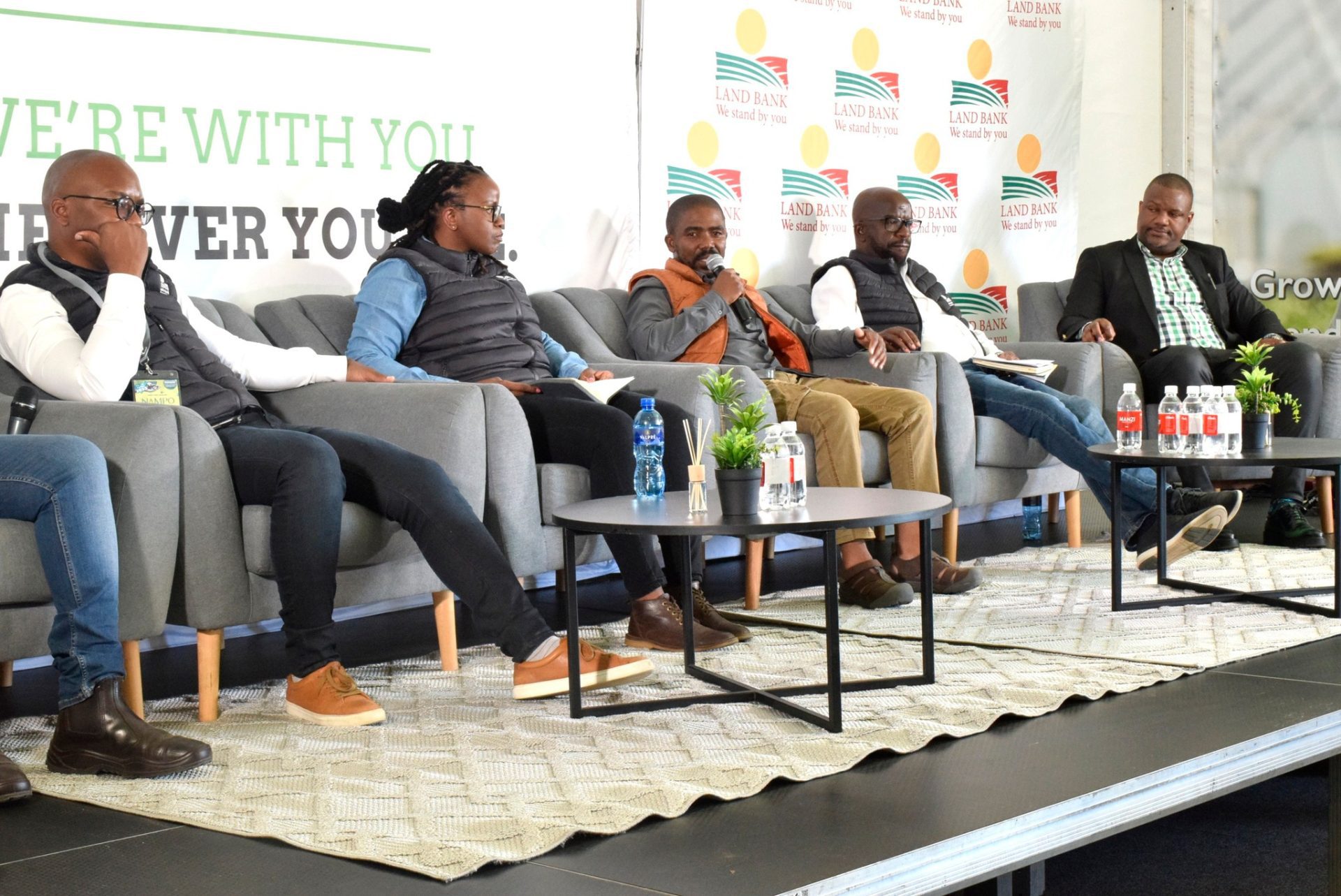
If you’ve ever wondered what the future of farming looks like, a trip to the Nampo Agricultural Expo in Bothaville would give you a front-row seat. This annual gathering isn’t just about showcasing livestock, tractors and cutting-edge agri tech – it’s also where real conversations happen about the future of South African agriculture. One such pertinent conversation took centre stage when Food For Mzansi hosted a thought-provoking panel with the Land Bank, diving deep into a topic that hits home for many: access to finance for black farmers.
Blended finance was at the heart of the discussion – a funding model that mixes a loan with a government grant, designed to ease the financial burden on emerging farmers. The Land Bank used the platform not just to explain how blended finance works, but to show its impact through the voices of farmers who’ve benefited. Their stories added a powerful, human layer, showing how the right support can transform small operations into thriving agri-enterprises.

For many emerging black farmers, getting access to affordable finance has been a barrier. High risks, limited support and systemic challenges have made commercial funding nearly impossible to access. But the Blended Finance Scheme (BFS), introduced by the Land Bank in partnership with the Department of Agriculture, is changing that narrative.
“One of the key objectives is to ensure that black producers can participate in the
agricultural economy, commercialise their operations and grow their productive
capacity,” explained Christopher Chaka, Provincial Head for Gauteng at Land Bank.

So, what exactly is blended finance?
It’s a funding model that combines a traditional loan with a grant from the government. The grant essentially acts as the farmer’s equity, helping them qualify for finance they’d otherwise be denied. The Land Bank plays a crucial role in selecting the right farmers and guiding them to market, with a focus on commercial viability, transformation and food security, especially in communal land areas.
R140 Million Diary Empire
Tshilidzi Matshidzula’s journey into dairy farming has been remarkable. At just 19, he
became a farm manager at Little Barnet in the Eastern Cape and worked his way up to eventually owning the operation. But breaking into the capital-intensive dairy industry was no easy feat.

“Commercial banks weren’t interested, and I understand why now,” said Matshidzula. “But Land Bank took a chance on us. They guided us and helped us build a bankable business model. For seven years, they stood by us.”
In 2023, Matshidzula secured a 357-hectare farm in Stutterheim with blended finance support, a crucial step towards his long-term goal of full farm ownership and development. His story not only highlights the transformative impact of blended finance,but also shows what is possible when young black farmers are backed with the right tools and guidance.
“Without strategic partnerships like this, getting into dairy is nearly impossible,” he said. “To milk one cow, you need around R100 000. You need at least 400 cows to run a sustainable business. If you want to milk 500 cows and do not have the right support, you have no chance — I can tell you now.” Thanks to this backing, he now runs three farms producing 18 million litres of milk a year, with a turnover of R140 million. “Land Bank helped us build from the ground up.”

From pharmacist to full-time farmer
For another Eastern Cape-based farmer, Vumile Mzizi, farming has always been a
calling. Although he studied pharmacy, his heart remained on the land. “It has been a journey, doing what I love,” he says. In 1995, his father lost his job and turned to farming on their 510-acre family property. After graduating in 2010, Mzizi began helping out while still working, pouring his own money into the farm. But despite receiving some government support, the family was hit hard by drought, debt and poor returns.

By 2020, he left pharmacy behind to farm full time. “We planted sugar beans, maize and soya beans, but every time we had to repay the funders, we were left with nothing,” he recalls. “As black farmers, we are often forced to farm on land that has not been worked for years. Fixing that land while repaying loans left us with no profit.” The turning point came when Land Bank stepped in with blended finance support. “We had been struggling with mechanisation. Land Bank helped us access a larger tractor that could do the work of three or four machines,” he says.
Their support went further. “We used to plant potatoes and travel 35 kilometres just to wash and transport them. We were losing money. Land Bank bought us a washer and a shed. We started doing things the right way — and began seeing profits.” Looking back, Mzizi is clear: “I believe without Land Bank, especially last year, we would not have come back. Now we can fulfil our obligations to lenders. Land Bank made that possible.”

The message from the conversation was clear, the Land Bank is focused on supporting farmers. With seven more years of government support confirmed, following the completion of the initial cycle in March 2025, the programme is poised to go even further. “Yes, resources are limited, but we will continue to push to keep this programme going,” Chaka added. “We have reached every corner of the country and supported farmers of all sizes. Without the grant component, we would not have achieved this scale.” Chaka’s message to black farmers is clear: stay informed, be ready and take full advantage of this opportunity to grow.