
Revved Up With Itu Motoba
The other day, I went into an auto spares shop to ask how much it would cost to replace the light bulbs in my headlights. I was given a ridiculous quote. I’ve always suspected that we, as women, are often taken for a ride in these spaces, so I asked my boyfriend to make the same enquiry at the same shop. It pains me to say that I was right. He was quoted a third of the amount I was given.
The crazy part is that I know more about cars than he does (I’m the petrol head afterall) but every time I need to fix something or buy parts, I take him along. Not just for moral support, but to ensure some kind of fair treatment.
There is a particular tone some mechanics reserve for women. It’s slow and deeply condescending—the tone of someone who has already decided you don’t know what you’re talking about, even when you drove the car there, heard the noise yourself, and paid for the service with your own money. If you’re a woman who owns a car, this experience is probably painfully familiar.

You walk into a workshop with a clear explanation of what’s wrong, only to be spoken over. Your description is dismissed. Your questions are treated like inconveniences. Suddenly, a simple issue becomes a dramatic diagnosis, complete with unnecessary parts, inflated labour costs, and a price that feels more like a punishment than a quote. And heaven forbid you say, “I’ll think about it.”
One of the most frustrating parts of dealing with mechanics as a woman is the assumption of ignorance. There’s an unspoken belief that we don’t understand how our own vehicles work, that we won’t question invoices, and that we’ll panic at the first mention of engine trouble. This assumption creates the perfect environment for exploitation—and many women have paid the price for it. Most times, literally.
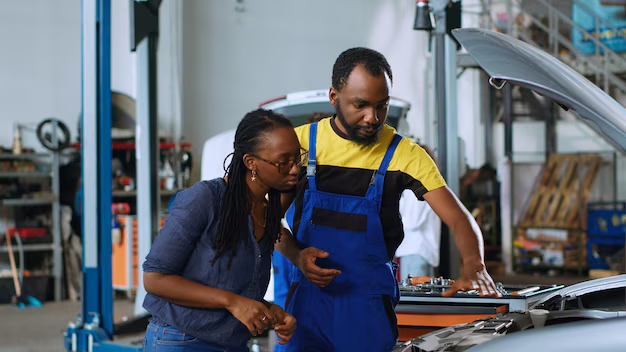
There are countless stories of women being overcharged, over-diagnosed, or sold problems their cars never had. Others have discovered that perfectly functional parts were removed and replaced unnecessarily—or worse, swapped out entirely. A visit meant to fix one issue suddenly becomes a long list of “urgent” problems that somehow didn’t exist before the car entered the workshop.
What makes this worse is how quickly the behaviour changes the moment a man enters the conversation. Suddenly, the explanation is clearer. The price drops. The respectappears. The same mechanic who dismissed a woman’s concerns now listens carefully when they’re repeated in a deeper voice.
That’s not coincidence. That’s misogyny.
The problem is that we drive these cars every day, and we are learning more and more about them—and we’re not going to stop driving. We pay for them. We maintain them. And we are allowed to ask questions without being patronised or financially punished for doing so.
The emotional toll of this dynamic is real. Many women delay repairs out of fear of being scammed. Others bring male friends or relatives along—not because they need help understanding the issue, but because they need protection from being taken advantage of.
Mechanics hold power because most people don’t want to—or have the time to—become car experts. That power comes with responsibility. Exploiting women’s trust, fear, or lack of technical language is unethical, plain and simple.

This isn’t a call to demonise all mechanics. There are honest, professional ones who do their jobs with integrity and respect. And also it is not just mechanics that are problematic, it is more or less the whole automotive industry, from where you buy the car, to where you buy spares, where you service your car etc. But pretending this problem doesn’t exist helps no one—except those who benefit from it.
Women are not stupid, we are not careless and we are certainly not walking wallets.
We deserve transparency. Fair pricing. Honest diagnostics. And, most importantly, respect.
Until that becomes the norm, women will continue to share stories with each other, and avoid problematic places or walk into workshops already braced for a fight they never asked for. And maybe that’s where real change begins—when silence is replaced with truth, and misogyny is called exactly what it is.
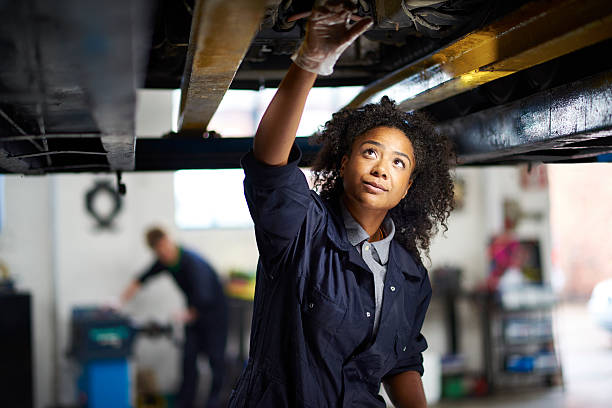
This issue has left me heated more than once—so much so that I’m just short of organizing a march. So mechanics, please be decent to us. And sisters, stay vigilant. And I think we seriously need more women mechanics.