By Aurelia Mbokazi-Kashe
Moikanyi Mmalorato Kgositlou’s path into farming has had many setbacks, droughts and losses, yet she remains unwavering in faith. A bold risk-taker, she sees farming as both a test of faith and a discipline grounded in knowledge and experience. Her ultimate vision is to own the entire agricultural value chain, from farm to table, and turn her passion for agro-processing into a legacy that builds a legacy and empowers communities.
Please tell us about your journey before you became a farmer.
I’m the founder and Managing Director of Set Destiny Holdings, and a mother of three sons (Lesego, Olebogeng and Oratile) – who are also my business partners. I come from a corporate background, and realised it prepared me for the journey I’m on today as a farmer.
Most of my career has been in finance, Supply Chain ( procurement, logistics, demand planning, Supply Planning, Inventory Management and Order fulfillment) , Training and Development (Facilitator and Assessor) where I held senior and executive positions. I spent a long time at the Post Office before moving into the private sector in 2008 and worked for companies like Barclays Bank, Tiger Brands, Reckitt Benckiser, Nampak, Barloworld among others. I was also the African representative for InnerWorkings, a company based in Paris, and managed large projects across the continent.
I am an ordained Minister and a Pastor of Bethel AME Church (Pretoria) and serve as a Connectional Worship Director of Women In Ministry (AMEWIM).

What interested you in agriculture and where and when did your journey start?
I did not plan to go into agriculture. After receiving my payouts, I found myself
wondering what was next. In 2023 an ex-colleague, Yvonne Mokwatsi introduced me to Ntate Melkin from Mofufutso village in North West who invited me to invest in a communal farming project set on 260 hectares. They had land and tractors, but struggled to get funds for day to day running of the project. I went in as an investor, and we planted sunflowers.
Sadly, there was a drought and we didn’t harvest anything. I lost over R500 000. People thought I’d give up. My children also teased me, calling me the lady who invested half a million and got nothing back. But that humour helped keep me going. Once I got involved, I started learning from people on the ground and developed a strong interest in agriculture. I attended farmers’ days and began to understand the language of farming. Farmers’ days were especially helpful, and I built relationships with other farmers. I also met representatives from the Land Bank and learned about their programmes. They recognised my passion and encouraged me to put together a business plan.

Even though I didn’t have much farming experience, my business background helped. We put together a solid plan that included cash flow projections and the Land Bankfunded us. We found this farm in Coligny, which has better rainfall, and leased 330 hectares.
We also found another smaller farm, 10 hectares, in Soshanguve, where we plant vegetables. We received sponsorship from Potato South Africa and planted 0.2 hectares of potatoes. We recently harvested them; it was not a great yield because of the heavy rains and wet soil, but it gave us valuable experience. We also grow spinach, butternut, and cabbage, and we supply some Spar outlets.

What challenges did you experience and how did you overcome them?
Initially, we planned to plant 200 hectares of sunflower and 100 hectares of maize, but due to a delay in payments, we missed the planting window. We decided to plant 110 hectares of beans using the inputs we already had, despite being advised to wait for the next season. Right after we planted, the rain stopped. The land stayed dry for a long time and we couldn’t spray for weeds until it rained.
But to our surprise, the beans still started growing, even without much moisture. However, weeds and grass began to choke the beans, and we were advised to remove them by hand. We work closely with an agronomist/ Chemicals Supplier, Henco Du Toit who held our hands from the day we placed our order. He visited us regularly throughout the planting season and gave us necessary support and advice on activities like calibrating machines, Spraying plan and even on weather reports advising on when and not to spray . We are truly grateful for his support and advice. Farming tests your faith. You have to trust God. Even though I’d lost everything the previous year, I still had a strong passion for sunflowers. I decided to plant them again.

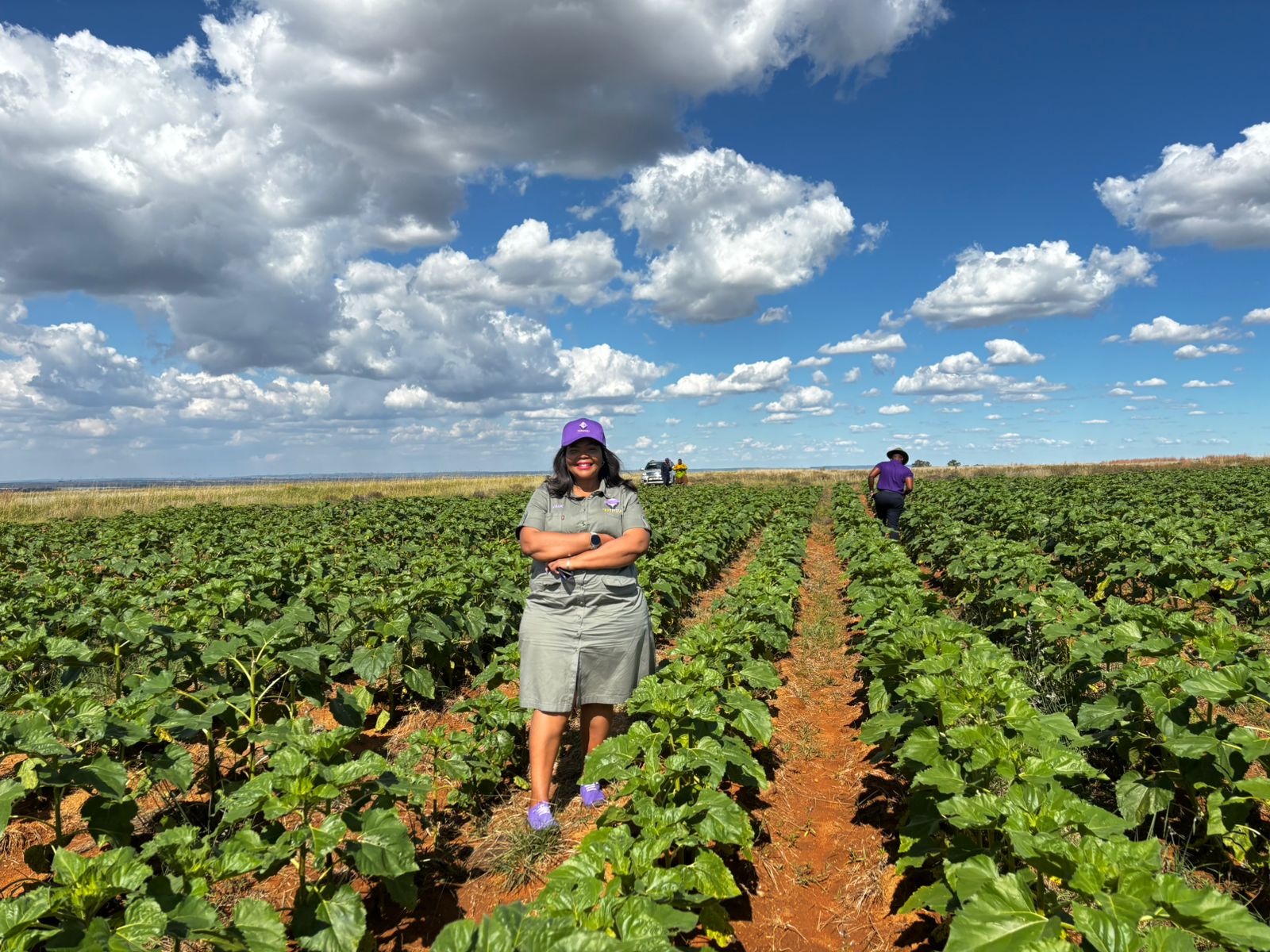
I was told it was too late to plant sunflowers, but we pushed ahead and planted 52
hectares. We are praying for no frost and I believe we’ll harvest. The Bible says that
when a farmer plants seed, weeds grow too, but the harvest is still guaranteed.

What important lessons have you learned from farming?
The biggest lesson I’ve learnt as a new farmer is that farming requires self-
determination. I treat it like a product. We can’t afford to let the land lie idle between harvests; we have to make the most of it, and that’s why we’re running different projects. I create a planting calendar so we know what needs to go in the ground and when. I’m also grateful for my children — they’re great researchers and often bring new ideas.

What keeps you motivated despite the setbacks?
My children keep me going. I want to leave a legacy for them. I’ve mentored many
young people over the years and now I’ve chosen to work closely with my children while I still have the energy to share what I know. Sixty-five is around the corner, and I want to retire knowing I’ve done my part in preparing them and building something solid for the future. Succession planning is very important to me.

The other thing that motivates me is the belief that when God blesses you, it’s so you can bless others. I want to empower communities, not just my family. My dream is for employees to eventually become shareholders. When I see my workers happy, I feel like I’ve truly achieved something. This is about building something that can benefit many people. Despite all the challenges, I feel we’re already a step ahead for the next season, with enough inputs for about 150 hectares of sunflowers and equipment, tractors. Our focus is to keep being productive.

I’m not afraid of risk, and I prefer to spread the risk by working on different sites. If one area suffers drought, another might still give us a harvest. Sometimes even my kids tell me to slow down, but I remind them that I’m not new to business. I’ve helped companies make money by taking bold steps. If resources are there, I go all in.
What does the future of Set Destiny Holdings look like?
My ultimate goal is agro-processing. My strength is in manufacturing — I was a supply chain manager, and I worked closely with planners. I don’t want Set Destiny to be seasonal. That’s why our employees are full-time. If we succeed and the company grows, everyone benefits. We’re currently a team of 13, and I’m the only woman so far. I come from a logistics background, that’s where my real passion is.
I initially wanted to get into trucking, but then I thought, what would I be transporting? I want to own the whole value chain, from farm to fork. For now, I’m mastering the production side. Once I’ve built a solid team and everything is running smoothly, I’ll go back to logistics, moving grain I’ve grown myself. Eventually, I’ll expand into manufacturing. That’s the big picture. I’m taking bold steps.

Pictures By Gugulethu Tshabalala