Global certainty deficits are nothing new. However, the current prevailing one is exacerbated by the most recent geopolitical conflicts and has resulted in a series of shocks that the world – and certainly, the agriculture sector – could do without.
Apart from geopolitical battles, also at the core of this certainty deficit lie geo- economic shifts, climate volatility, trade protectionism, and energy price shocks – amongst other issues.
The Global Economy
The International Monetary Fund (IMF) World Economic Outlook projects global economic growth at 3.3% and 3.2% for 2026 and 2027 respectively. Though the IMF has forecast a dip in global inflation, escalation of geopolitical tensions have been counted among “key downside risks”. And reduction of uncertainty and implementation of structural reforms are among the recommended mitigators.
The South African Economy
Compared to countries like Germany, Brazil and Japan, South Africa is a relatively young democracy, having entered a new dispensation in 1994.
Back then, the South African economy was characterised by a profound structural crisis, a low growth equilibrium, and ubiquitous economic exclusion and underdevelopment.
The period since 1994 has seen the South African economy undergo profound restructuring and steady integration into global markets, followed by significant growth. In fact, the Industrial Development Corporation (IDC) highlights 2004–2007 as the period that recorded the fastest South African economic growth since the 1960s (GDP increased by 4.7% quarter-on-quarter in Q3 2007).
However, since 2007, the economy has experienced significant shocks and irregularities, with Statistics SA reporting the q3 2025 quarter-on-quarter growth rate as only 0.5%. The annual and q4 2025 q-o-q GDP data were due to be release by the entity shortly after producing this piece.
Global Agriculture
Fifty years ago, the global agricultural context was typified by a localised environmental certainty deficit; simpler, less integrated supply chains with less sophisticated logistics ecosystems; and low digital dependence.
The modern-day agricultural landscape largely reflects the opposite but has also absorbed notable shocks related to the certainty deficit, such as a reduction in trade volumes, GDP growth, and an appetite for foreign direct investment. Add to this, the adversely shifted risk profile of farmers, processors and traders around the world.
South African Agriculture
After deregulation in 1997, the South African agriculture sector experienced expanded markets that fast-tracked trade.This shift from relative scarcity that emanated from state-led control boards and price fixing to the complexity of a free-market system has had its fair share of challenges.
These include often misaligned legislative and regulatory changes – local and abroad – the Covid-19 pandemic in 2020 and the related effects of lockdown, the Russia-Ukraine war and the current conflicts in the Middle East, and US “reciprocal” tariffs.
The post-deregulation world has also thrust local agricultural players like fruit producers – who had operated in an insular environment – into a fiercely competitive global market context where other competing countries boast free trade agreements and attract more competitive prices.
On the bright side, South African fruit producers do have some leverage. The integration and transformation of the global fruit value chain present significant advantages, such as better export opportunities.
Granted, evolving global consumer trends have increased the pressure on the local agriculture sector and certainly the fruit industry, in terms of production methods and cultivar choices.
However, this also offers an opportunity for better consumer education, and closer and broader collaboration and synergy among local players and their counterparts elsewhere in the world.
The South African Fruit industry
The goal of Fruit SA – the representative umbrella body of the local fresh fruit industry – is to build a competitive, sustainable and inclusive future for industry value chain players.
Industry players have pursued growth, employment and equity among other priorities. These rank high on the agenda of Fruit SA which is guided by the focus areas of government and stakeholder relations, market access, and transformation.
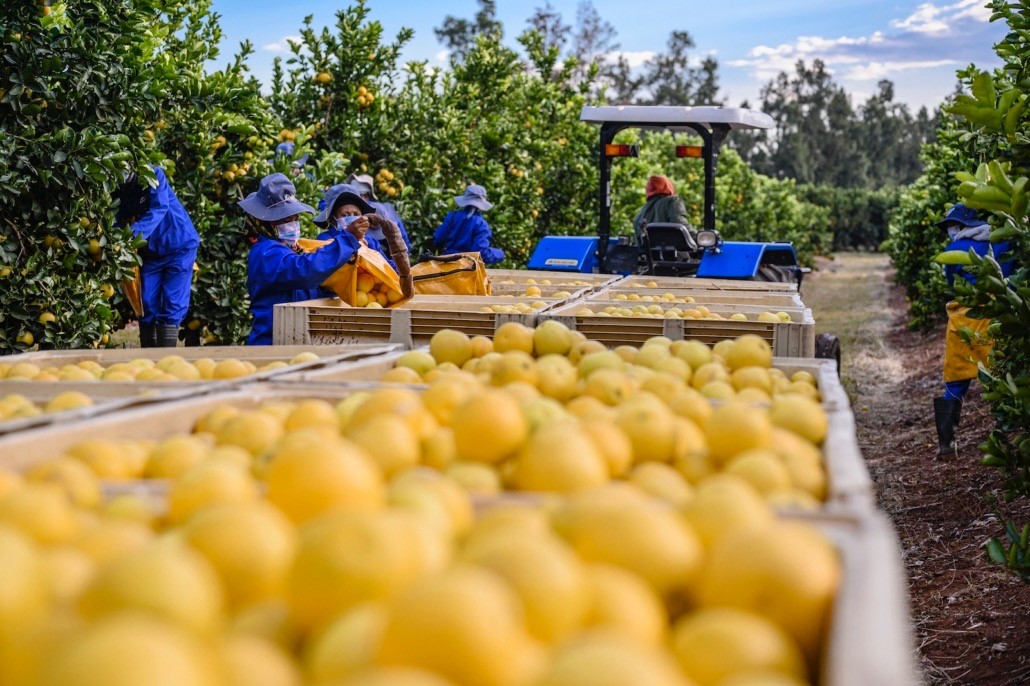
But climatic inconsistencies, restrictive free trade agreements, infrastructural setbacks, and rising costs of production on the back of a rising global certainty deficit have made for a tumultuous ride locally.
Certainty and Trust
We distrust that which we are uncertain about – these are mutually inclusive. The growing certainty deficit is eroding trust. And a trust deficit hampers progressive trade and economic growth.
So, what is the way forward for agriculture and the global economy?
As the IMF report states, "If the goal is to restore global certainty, trust and confidence, policymakers must formulate credible, transparent and sustainable policies"
Fhumulani Ratshitanga
CEO: Fruit South Africa