By Ntambo Mabuza
The inaugural Gauteng Agro-Processing Convention and Expo at Gallagher Estate was far more than an industry gathering—it was a clear call to action. On the first day, MEC Vuyiswa Ramokgopa, political head of the Gauteng Department of Rural Development and Agriculture, delivered a poised and compelling keynote. Her quiet confidence and sharp articulation, worthy of any corporate boardroom, emphasised Gauteng’s strategic commitment to leveraging its agro-processing sector for inclusive growth.

The two-day Gauteng Agro-Processing Convention drew a wide cross-section of the food industry—policymakers, farmers, processors, retailers, investors, and financiers. Their shared goal was to confront the sector’s uncomfortable truth: while agro- processing appears profitable on the surface, deep inequalities continue to divide those who thrive and those who barely survive.

Gauteng may be the smallest province by land size, but it is the engine room of South Africa’s economy—and a powerhouse in the food sector. It hosts two of the country’s largest fresh produce markets in Johannesburg and Tshwane, which together command nearly 50% and 25%, respectively, almost three-quarters of the national market share.
Although Gauteng plays a modest role in primary agriculture, its agro-processing strength is undeniable. In 2023, the province’s food and beverage manufacturing sector contributed over R780 billion to the economy. According to MEC Ramokgopa, Gauteng is also responsible for up to 35% of the continent’s total agro-processing output—a clear sign of its regional dominance.

“What makes Gauteng uniquely positioned is not simply what we grow, but how we convert raw agricultural products into value-added goods and economic infrastructure. At the heart of this system is an agro-processing industry that moves food across borders and connects to retail shelves and cities—not only in South Africa, but across the continent and the globe,” she said.
Despite its strong performance, the agro-processing sector faces persistent challenges, chief among them the exclusion of capable, trade-ready SMMEs. MEC Ramokgopa noted that while the sector drives employment, innovation, food security and industrialisation, too many entrepreneurs remain locked out of the value chain, lacking capital, market access and scalable partnerships.
“The agro-processing sector’s] impact spans employment, innovation, food security, rural development, and—most importantly—industrialisation. Yet too many of our local entrepreneurs remain locked out of this formal value chain. Too many SMMEs are starved of capital. Too many producers lack market access and scalable partnerships,” Ramokgopa asserted.

Referencing the 2019 Growing Gauteng Together strategy, which named agro-
processing as a key driver of economic growth, MEC Ramokgopa said the Convention aimed to shift the sector’s dynamics by deepening investment and strengthening linkages across the value chain. “[It’s about removing bottlenecks] and bringing everyone—from township cooperatives to multinational investors—into the same room, at the same table, and with the same mandate: to move Gauteng forward and grow our agro-processing sector,” she emphasised.

According to the MEC, the agro-processing pie can, and must, grow. A mere 2% increase in agro-processing activity could translate into a 10% boost in the manufacturing sector, she argued. With this in mind, the heavy lifting — identifying resources, unlocking investment, and expanding participation — was left to the delegates and interactive panel discussions.
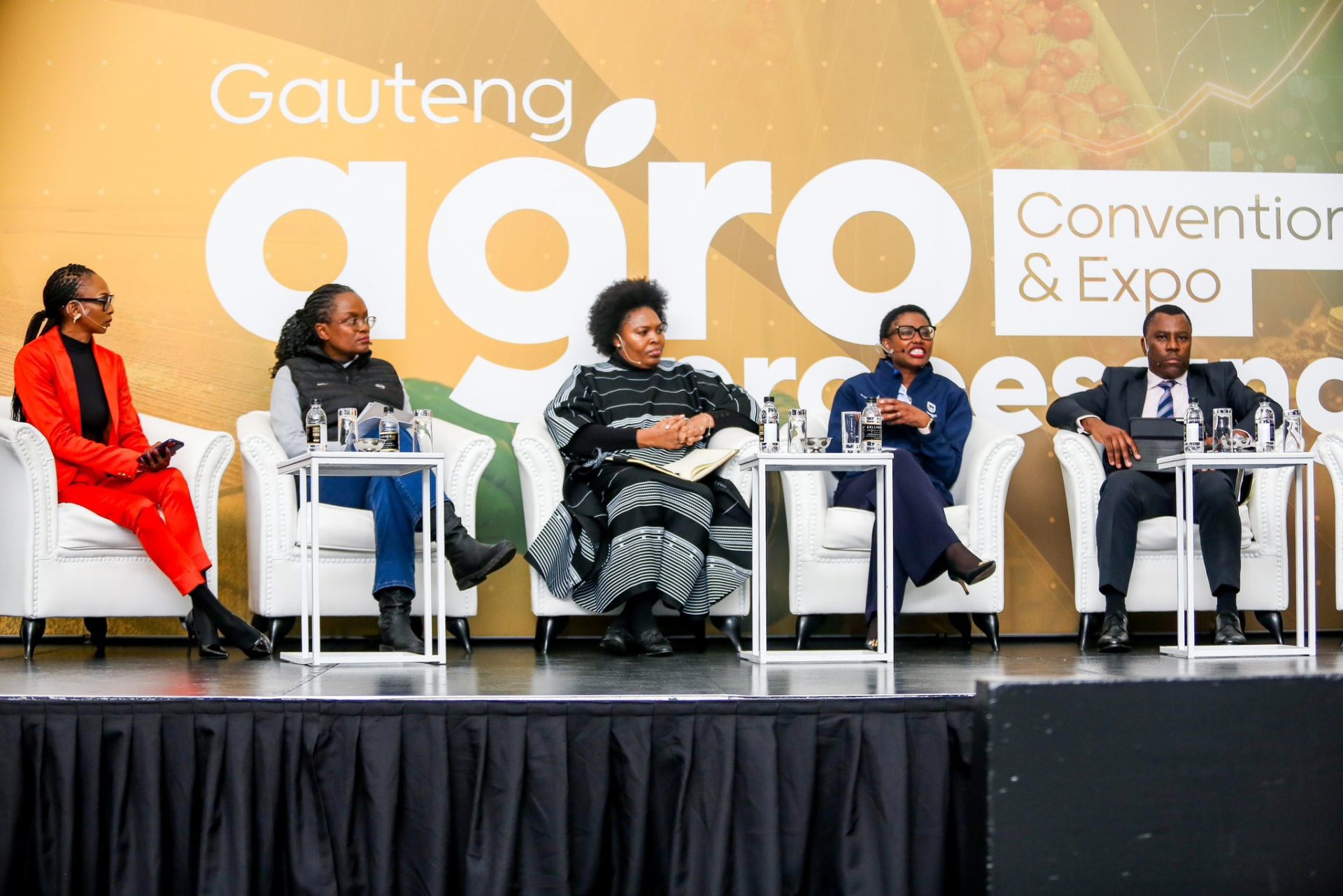
Topics ranged from financing and market access to practical insights shared by entrepreneurs, producers, and cooperatives who have successfully navigated the agro-processing journey.
Demonstrating practical commitment, MEC Ramokgopa used the Convention as a platform to launch the “Made in Gauteng” campaign. She also announced a R100 million blended finance facility, in partnership with the National Empowerment Fund, to support agro-processing enterprises in the 2025/26 financial year.
The funding will be guided by five strategic pillars:
Access to innovative finance for township enterprises
Infrastructure development for decentralised production
Localised procurement mechanisms
Institutional coordination across sectors
Quality assurance and value-chain integration