Aurelia Mbokazi-Kashe
As Parliament raises concerns about the future of South Africa's Blended Finance Scheme, many emerging farmers are asking a more practical question: what is it, who qualifies, and could it help turn a farming dream into a sustainable business?
Parliament's Warning Sparks Fresh Questions
Parliament's warning over funding shortfalls in South Africa's Blended Finance Scheme has once again thrust one of agriculture's most important transformation tools into the spotlight.
The concern is a serious one. Members of Parliament's Portfolio Committee on Agriculture recently questioned whether enough funding is available to sustain the programme, warning that growing demand is beginning to outstrip available resources. The committee heard that the scheme requires around R1.5 billion annually to meet demand, yet only R613 million has been allocated for the current financial year. Concerns have also been raised about delays in funding disbursements and the pressure this places on farmers who depend on timely financial support to plant, harvest and expand their operations.
But beyond the political debate and funding concerns lies a much bigger question: What exactly is blended finance, and why has it become such an important lifeline for emerging farmers across South Africa?
More Than Just Another Loan
For many aspiring farmers, accessing finance remains one of the biggest barriers to growth. Traditional agricultural loans often require collateral, strong balance sheets and a proven commercial track record, requirements that many developing farmers simply cannot meet despite having viable farming businesses.
This is where the Land Bank Blended Finance Scheme was designed to make a difference.
Established through a partnership between the Department of Agriculture, Land Reformand Rural Development and Land Bank, the scheme combines a government grant with a commercial loan. The objective is to help emerging farmers access the capital they need while reducing the financial burden that often comes with conventional lending.
Unlike a traditional loan, where every rand borrowed must be repaid, blended finance includes a grant component that does not require repayment, subject to programme conditions. The grant effectively lowers the amount that a farmer needs to borrow, making funding more affordable and improving the chances of building a sustainable farming business.

Opening Doors for Emerging Farmers
The programme is specifically aimed at accelerating transformation within South African agriculture by supporting black-owned farming enterprises, youth-owned businesses, women-led agricultural operations and developing farmers who are ready to take the next step towards commercialisation.
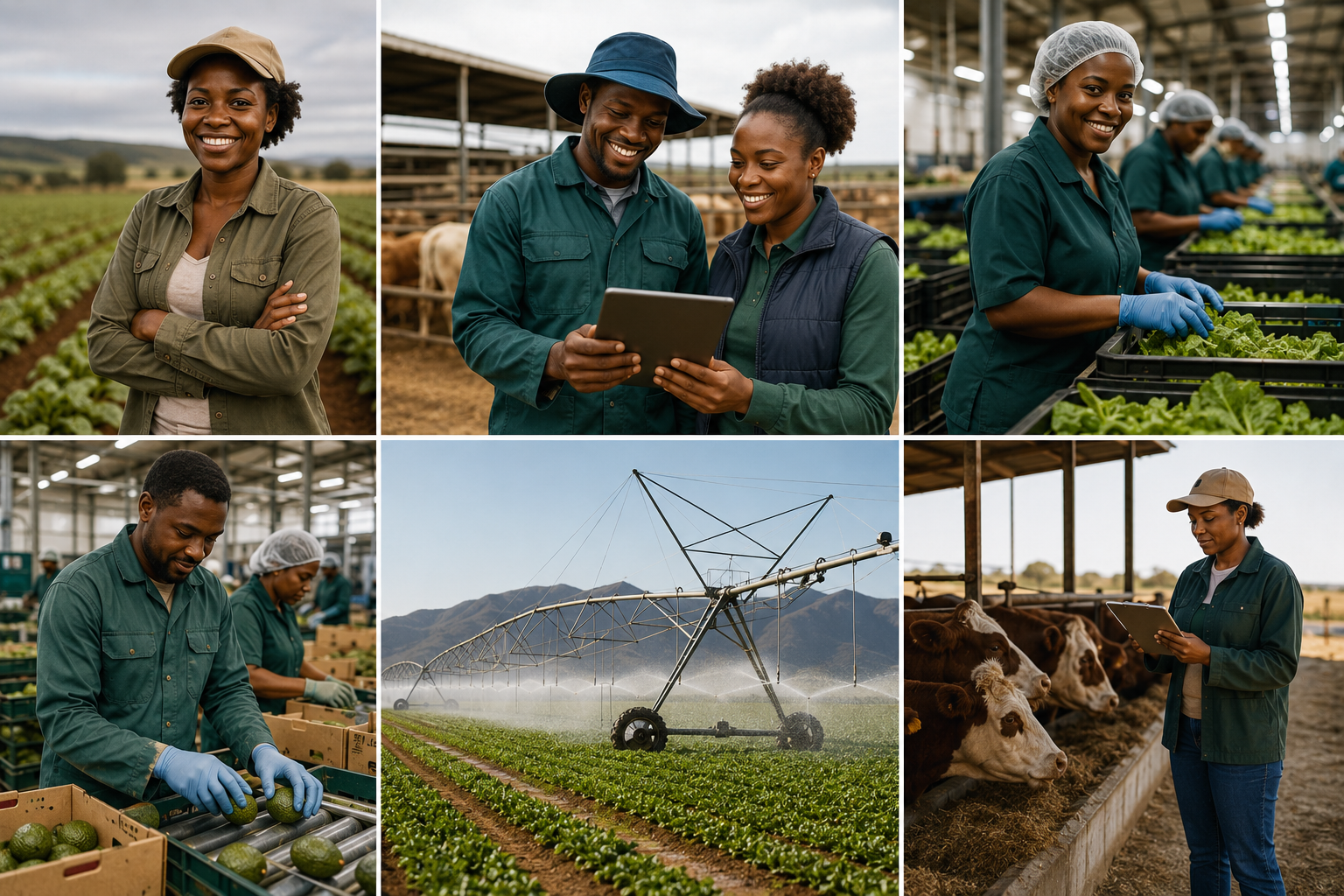
Importantly, the scheme is not limited to crop and livestock farmers. It also seeks to support participants throughout the agricultural value chain, including businesses involved in processing, packaging and other value-adding activities. The broader goal is to help emerging agricultural entrepreneurs move beyond survival farming and become competitive commercial players capable of creating jobs, contributing to food security and driving economic growth in rural communities.
For many farmers who have struggled to secure traditional financing, the scheme represents one of the few realistic pathways into commercial agriculture.
From Small Operations to Commercial Farms
The impact of blended finance is already being felt in parts of the sector. According to Land Bank, several beneficiaries have used the programme to expand production, purchase equipment, invest in infrastructure and create employment opportunities. Some have significantly increased the size of their farming operations, while others have invested in long-term projects that would have been impossible without access to affordable finance.
The programme has been widely viewed as a practical tool for helping emerging farmers bridge the gap between small-scale production and fully commercial operations. For many beneficiaries, it has provided not just funding, but an opportunity to build a business with long-term growth potential.
Why Oversight Matters
While Parliament acknowledged the value of the programme, members stressed that success should not be measured simply by how much money is approved or disbursed.
Instead, they argued that the true measure of success is whether farmers become commercially sustainable, create jobs and contribute meaningfully to agricultural transformation and food security.
The committee also raised concerns about reports that some approved funding reached beneficiaries only after crucial planting windows had passed. Such delays can have devastating consequences for farming businesses, reducing productivity and increasing financial risk.
Members further called for stronger monitoring, improved accountability and greater support for beneficiaries through mentorship, technical assistance and market access initiatives. The message from Parliament was clear: funding alone is not enough if farmers are to succeed in the long term.
Thinking of Applying?
For aspiring farmers interested in the scheme, the first step is to engage directly with Land Bank and determine whether their operation meets the programme's eligibility requirements.
Applicants are typically required to demonstrate a viable farming enterprise, provide supporting financial information and present a clear business plan showing how the funding will contribute to growth and sustainability. The stronger the business case, the greater the likelihood of securing support.
As with any funding application, preparation matters. Farmers who can clearly demonstrate their vision, market opportunities and growth potential are often best positioned to benefit from programmes such as blended finance.

The Bigger Picture
As Parliament debates the future funding of the programme, one thing remains clear: blended finance has become one of South Africa's most important agricultural transformation tools.
For thousands of emerging farmers, it represents far more than a funding mechanism. It is a bridge between ambition and opportunity, offering a realistic pathway into commercial agriculture for those who have historically struggled to access capital.
Whether government can secure the resources needed to keep pace with demand remains to be seen. But for the farmers hoping to build sustainable agricultural businesses, the future of blended finance is a conversation worth watching closely.
For more information: